



31 Mar Roger Tallon, Father of the TGV
DESIGNER PORTRAIT
ROGER TALLON
FATHER OF THE TGV
The general public often doesn’t know his name, yet his creations revolutionized our daily lives. From the TGV Duplex to the Lip watch, a dive into the work of a pioneer of French industrial design.
An innovative and passionate spirit, Roger Tallon (1929-2011) transformed the conception of design in France. Many everyday objects bear his mark, most often without us even realizing it. In reality, hundreds of objects have changed the lives of the French, along with just as many innovations in transport that still improve our daily lives today. And yet, Roger Tallon remains a name largely unknown to the general public.
Designer of mobility and innovation
In addition to television, with the P111 portable TV for Téléavia in 1963, staircases such as the M400 helical staircase in 1966, the 3T cutlery for Daum in 1967, ski boots, cameras, and many other products, Roger Tallon also explored graphic design with the layout of Art Press magazine. He loved working with artists, notably a few followers of the New Realists movement like Yves Klein and César. Beyond the Match 2000 watch in 1975, the first watch by the Lip brand with a diving strap, or the oil cans for Elf in 1980, Roger Tallon remains the designer of mobility par excellence.
The father of the TGV and modern transport
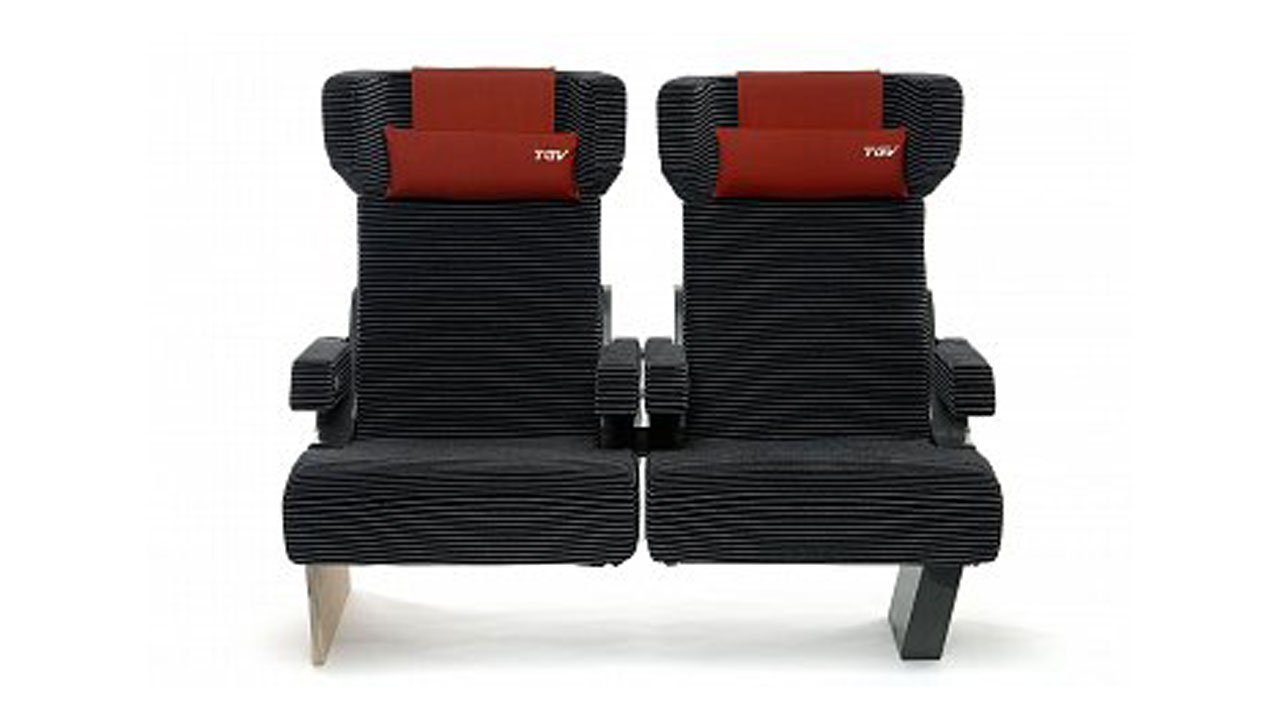
It is not for nothing that a retrospective exhibition of his creations at the Musée des Arts Décoratifs in Paris in 2017 showed him as a young engineer after the Second World War, at Caterpillar and then at Dupont de Nemours. Because it is indeed the TGV that will immortalize him. Yes, the TGV Atlantique in 1989, that was him. The double-decker TGV, called the TGV Duplex in 1997, is him again. It is his masterpiece, the one he probably cherishes the most. He imagined everything: the innovative and lighter materials capable of carrying nearly 50% more passengers, the famous curve of the nose shaped like an airplane on rails, the circulation from the top and middle of the train, the luggage spaces, and of course the seats.
From the Montmartre funicular to Line 14
Roger Tallon is also the Montmartre funicular in 1991 and, although few know it, the Eurostar in 1994! And in 1998, the Meteor Parisian metro project (Métro Est Ouest Rapide)… That’s our Line 14! The first fully automated line. Today, nearly 30 years after its inauguration and numerous extensions, Line 14 is the longest in the network at 30 km. As for the RER, Roger Tallon designed its signage so well (including a color map in 1976) that it hasn’t changed since.
No Comments