



21 Jun THE GREAT SAGA OF KNOLL
THE SAGAS OF DESIGN HOUSES
THE GREAT SAGA OF KNOLL
IN 10 EPISODES
It is the American dream of design. In the male lead, the German Hans Knoll. In the female lead, the American Florence Schust…

SUMMARY
- Episode 1 – Florence and Hans Knoll, it could be a Lelouch film
- Episode 2 – The Knoll dynasty, in the furniture business from father to son
- Episode 3 – Hans Knoll, his encounter with America and the Danish designer Jens Risom
- Episode 4 – When Hans meets Florence Schust…
- Episode 5 – Florence’s apprenticeship in Michigan and Hans’s spirit in NYC
- Episode 6 – The love of design and love itself
- Episode 7 – 1948 and already a success…
- Episode 8 – 1955, Cuba, the tragedy and Florence’s new life
- Episode 9 – Knoll without Florence
- Episode 10 – The dark years and the revival
Episode 1
Florence and Hans Knoll, it could be a Lelouch film
It is the American dream of design. It is, of course, a completely different version of A Man and a Woman. In the male lead, the German Hans Knoll. In the female lead, the American Florence Schust. And for the setting, it could be the Barcelona chair, which can be seen in Mary Harron’s film American Psycho. It could also be the Cesca, the chair on which actress Emma Suarez sits to write to her daughter in Pedro Almodovar’s film Julieta. Both chairs now belong to the hall of fame of iconic design objects. Just like so many other pieces from the Knoll catalog.
Florence Schust and Hans Knoll—who married in 1946 and subsequently created “Knoll Associates”, which became Knoll International in 1951—had an eye for unearthing talent! The most important designers of the 20th century: Eero Saarinen, Marcel Breuer, Mies Van der Rohe, Pierre Jeanneret, Harry Bertoia, George Nakashima….
THE INVENTION OF INTERIOR ARCHITECTURE
For, from the dawn of the industrial era, Walter, Hans’s father, fell in love with the Werkbund movement, then with the Bauhaus artistic movement, which advocated the union of art and industry. And it was exactly this marriage of creation and industrial production that Hans Knoll celebrated as early as 1929, by already collaborating with the greatest designers and architects of the time. Starting with Walter Gropius and Ludwig Mies van der Rohe. The former was none other than the leader of the German Bauhaus movement. The latter is the highly celebrated German-American architect.
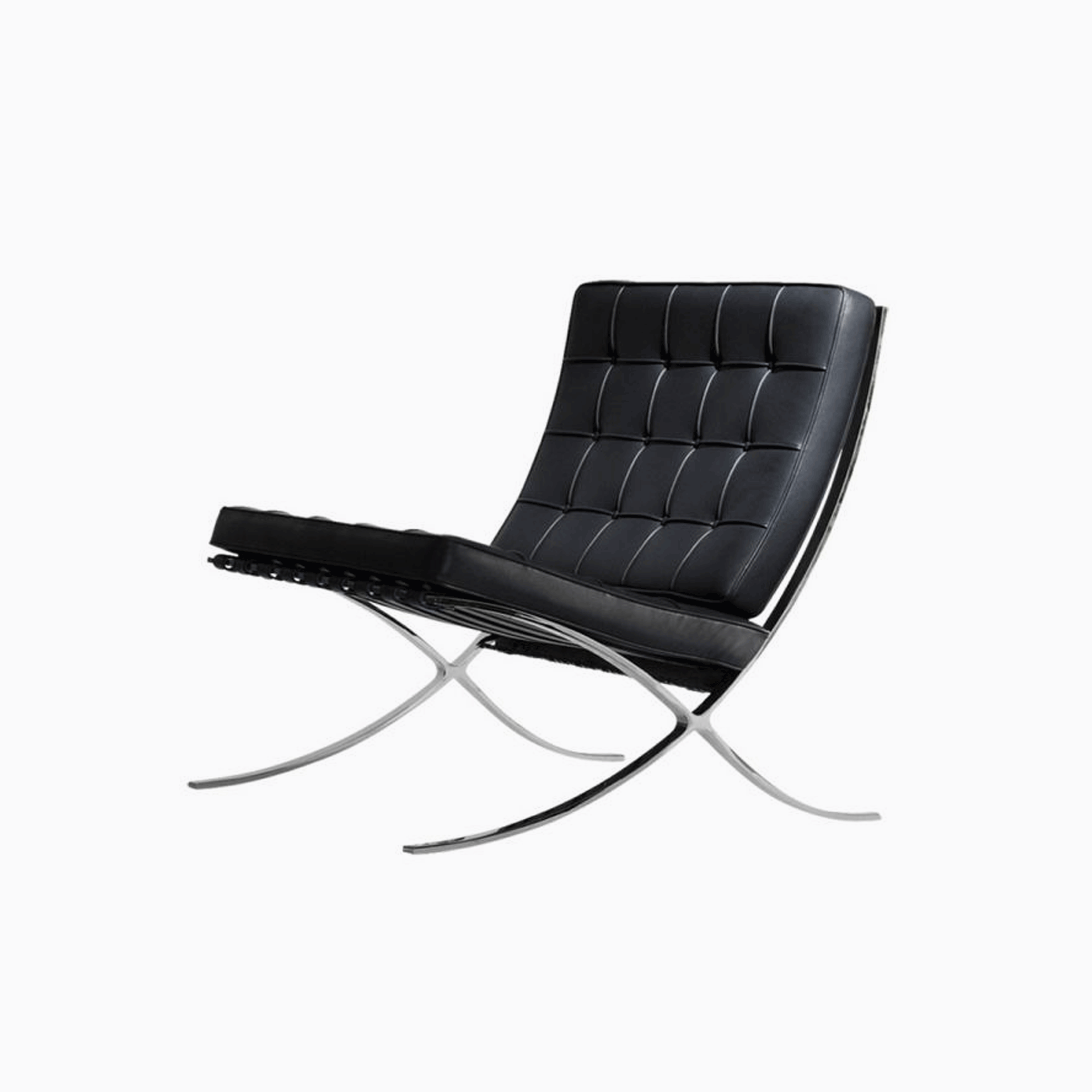
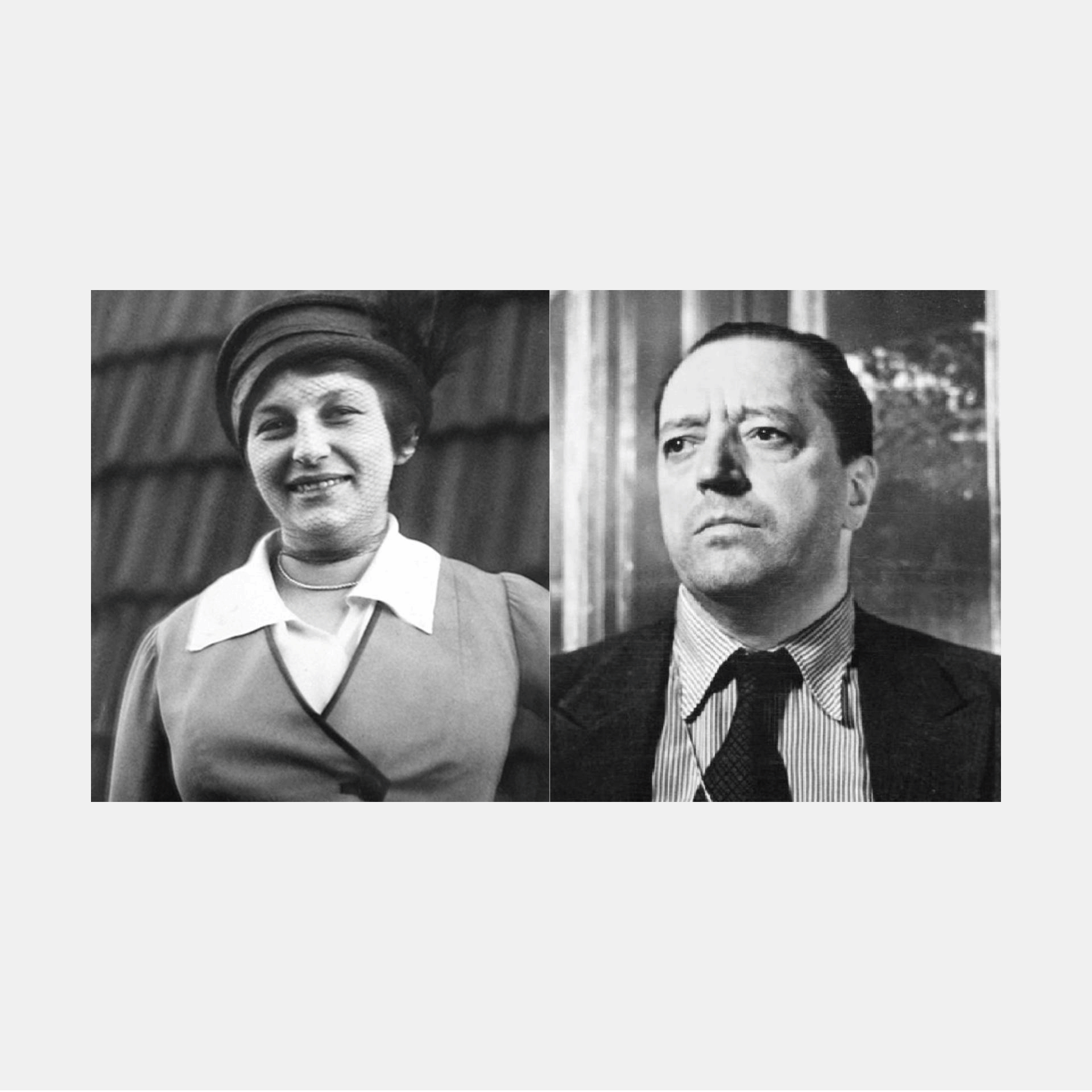
Mies van der Rohe had notably designed, along with interior architect and artist Lilly Reich, for the German pavilion at the Barcelona International Exposition in 1929, the Barcelona chair. Very futuristic for visitors at the time, with its exposed structure and its polished chrome steel base in the shape of an X.
But barely having started in 1931, its production halted, and the German architect, prevented from pursuing his career in his home country upon the arrival of the National Socialist Party, emigrated to the United States. At the time, Walter’s son, the Hans Knoll of our saga, was only 17 years old… It wasn’t until 1948, when he too had emigrated to America, that he would relaunch it on an industrial scale…
Meanwhile, it is 1931, and Walter Knoll, Hans’s father, was therefore already publishing “modernist” furniture.
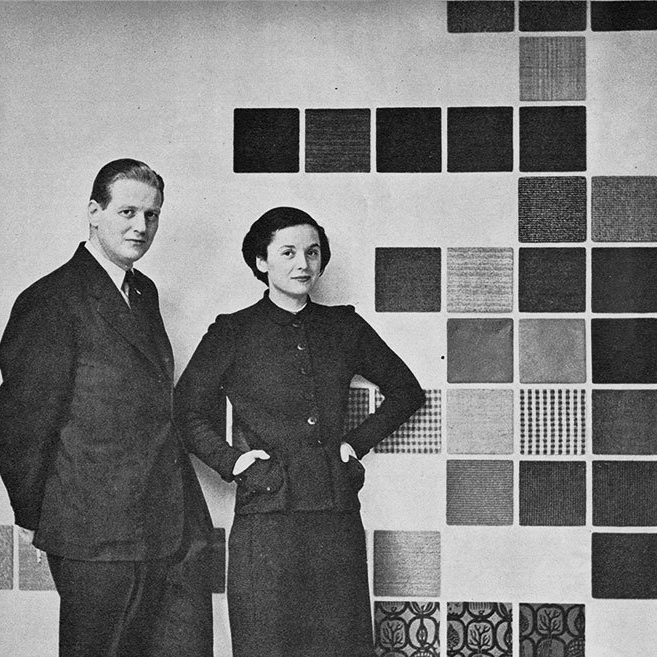
A VERY DESIGN-ORIENTED COUPLE
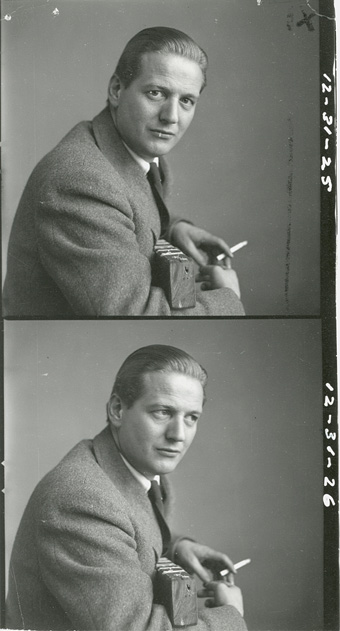
So Hans Knoll had a legacy to uphold! Born in Stuttgart in 1914, he went to get his education in the 1930s in England before landing in 1937 on the East Coast of the United States.
Official objective: to sell the family business’s products and therefore modern European creations. He is 23 years old. The idea of conquering and converting the New World to modernist culture drives him wild with enthusiasm!
In reality, on his father’s advice, he fled Nazi Germany and thus joined the great masters of German design and the Bauhaus movement who had also, for many of them, emigrated across the Atlantic.
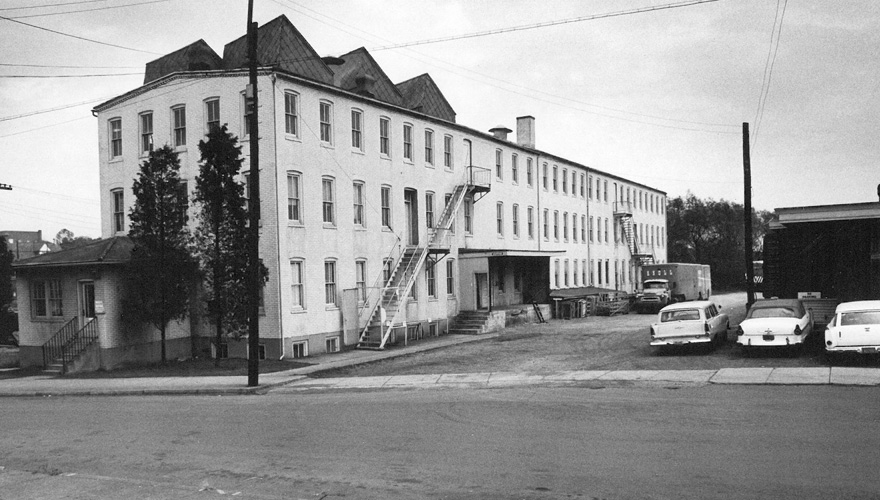
In any case, in New York, it would soon no longer be possible to bring supplies from Germany… It would be necessary to produce locally. So, in 1938, Hans founded his own workshop. Like a dazzling premonition of optimism, the sign bore the placard: “Factory N° 1”!
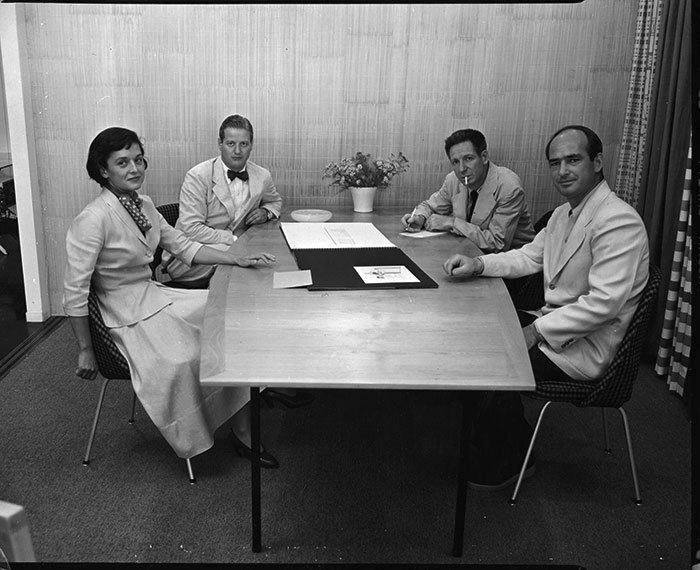
Episode 2
The Knoll dynasty, in the furniture business from father to son
In reality, in the Knoll family, there is Hans and Florence of course, but there was also earlier, on Hans’s side, Walter and even Wilhelm!
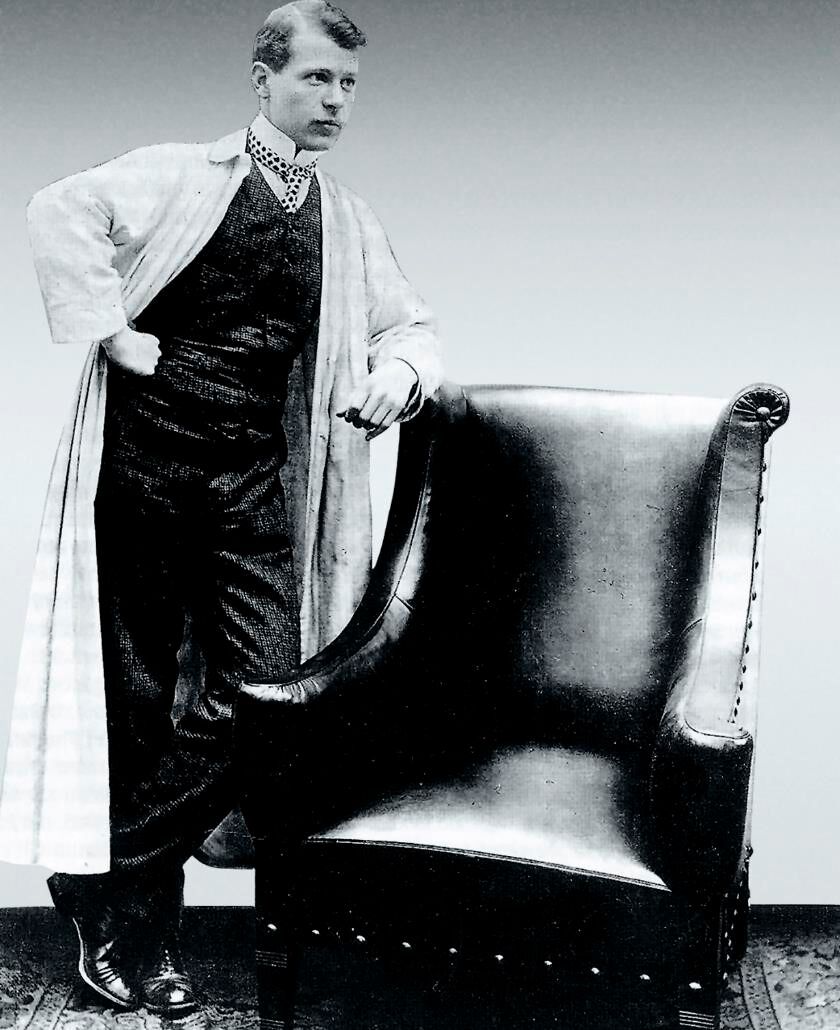
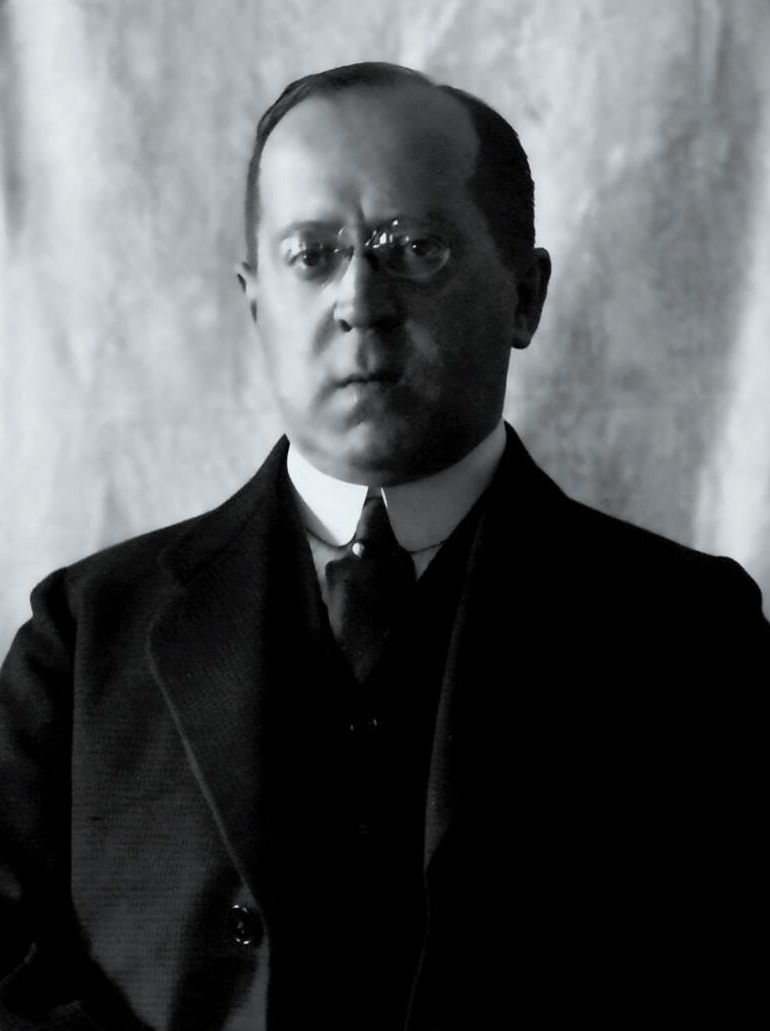
Hans is indeed the son of Walter Knoll, the head of an illustrious furniture manufacturing company based in Stuttgart, and the grandson of Wilhelm Knoll, founder of the dynasty in 1865.
The grandfather originally sold leather before specializing in the production of high-end seating and upholstery fabrics. This allowed him to become the official supplier to the court of the King of Württemberg, one of the sovereign states of 19th-century Germany. Around 1895, the company’s prosperity reached its peak. Branches opened in the metropolises of Saint Petersburg and Vienna. Wilhelm’s two sons, Walter and Willy, followed in their father’s footsteps in the family business.
However, to stand out, Walter Knoll founded his own house in 1925 (which still exists today). They worked with leather but introduced colorful fabrics as upholstery materials and, above all, invented a spring system that was revolutionary in the traditional craft of upholstery, as well as a base system for curved steel tube furniture.
KNOLL AND THE BARCELONA INTERNATION EXPOSITION IN 1929
For, from the dawn of the industrial era, Walter, Hans’s father, fell in love with the Werkbund movement, then with the Bauhaus artistic movement, which advocated the union of art and industry. And it was exactly this marriage of creation and industrial production that Hans Knoll celebrated as early as 1929, by already collaborating with the greatest designers and architects of the time. Starting with Walter Gropius and Ludwig Mies van der Rohe. The former was none other than the leader of the German Bauhaus movement. The latter is the highly celebrated German-American architect.
Mies van der Rohe had notably designed, along with interior architect and artist Lilly Reich, for the German pavilion at the Barcelona International Exposition in 1929, the Barcelona chair. Very futuristic for visitors at the time, with its exposed structure and its polished chrome steel base in the shape of an X.
But barely having started in 1931, its production halted, and the German architect, prevented from pursuing his career in his home country upon the arrival of the National Socialist Party, emigrated to the United States. At the time, Walter’s son, the Hans Knoll of our saga, was only 17 years old… It wasn’t until 1948, when he too had emigrated to America, that he would relaunch it on an industrial scale…
Meanwhile, it is 1931, and Walter Knoll, Hans’s father, was therefore already publishing “modernist” furniture.
HANS KNOLL – 1937, FLEEING NAZI GERMANY, DEPARTING FOR THE UNITED STATES
So Hans Knoll had a legacy to uphold! Born in Stuttgart in 1914, he went to get his education in the 1930s in England before landing in 1937 on the East Coast of the United States.
Official objective: to sell the family business’s products and therefore modern European creations. He is 23 years old. The idea of conquering and converting the New World to modernist culture drives him wild with enthusiasm!
In reality, on his father’s advice, he fled Nazi Germany and thus joined the great masters of German design and the Bauhaus movement who had also, for many of them, emigrated across the Atlantic.
In any case, in New York, it would soon no longer be possible to bring supplies from Germany… It would be necessary to produce locally. So, in 1938, Hans founded his own workshop. Like a dazzling premonition of optimism, the sign bore the placard: “Factory N° 1”!
Episode 3
Hans Knoll, his encounter with America and the Danish designer Jens Risom
But the beginnings in America were difficult. And what he saw across the Atlantic was enough to disillusion him. Not only did he realize that American architects and interior decorators knew almost nothing of the modernist aesthetics shaking up Europe—for once, modernity was not coming from the USA!!—but he faced another great challenge: seducing Americans who swore only by the Art Deco style and criticized modernity for its austerity and minimalism.
No matter! He dove in. Because, despite all the reluctance of the American public, Hans Knoll had many assets: he was handsome, charming, he seduced, he had a head for business and possessed a keen instinct! He opened an office and a first showroom on Madison Avenue. Even if the furniture he presented there was far from his avant-garde dream.
It was there that he met Jens Risom. This Danish designer had also emigrated to the New World two years prior, with the ambition of introducing a modernist Scandinavian approach to the American furniture market. He too thirsted to conquer America. But with the shortage of materials caused by the war, he could not find a position suited to his ambitions.
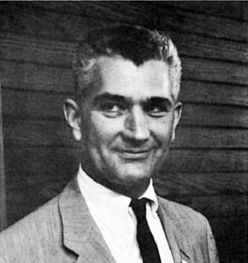
This was undoubtedly the encounter they both needed. For Hans, it would mark a decisive step in the history of Knoll.
For several months, they traveled the United States in search of inspiration… And in 1942, the Hans Knoll Furniture Company was launched with Risom as the principal designer. The first to enter the Knoll legend!
Driven by necessity, Risom’s first designs for Knoll utilized surplus military materials, including parachute straps and fabrics stretched over softwoods. But as rationing increased and the shortage of materials was felt more cruelly, Knoll asked him to revise his designs even more spartanly. In 1943, before Risom left to join General Patton’s columns, they launched the 650 Line, including the Lounge Chair, Knoll’s first chair. It has become an icon of 20th-century design. It still appears in the catalog today.
Episode 4
When Hans meets Florence Schust…
Full of energy, Hans Knoll multiplied his activities and contacts, bought drawings, and offered his services to architectural and industrial design agencies.
Thus, in 1943, he met Florence Schust. She had studied with some of the greatest masters of architecture and design, Ludwig Mies Van der Rohe and Eliel Saarinen. She had just arrived in NYC. She was looking for stimulating work. Being a female architect in a man’s world wasn’t so simple, even in the New World! Yet she would quickly manage to convince Hans that she could be very useful to him…
FLORENCE SCHUST, AN ORPHAN
Born in 1917 in the small town of Saginaw, Michigan, to a German father and a Canadian mother, she grew up in a wealthy environment. Her grandfather, a baker native to Württemberg in Germany, had emigrated to the United States in 1882. This was the first wink of fate, for Württemberg was the kingdom where Hans Knoll’s grandfather had been the furniture supplier.
Florence’s grandfather soon prospered at the head of the Schust Baker Company. Then it was the turn of Florence’s father, Frederik, the eldest of ten siblings, to take over the management. Everything could have continued like this to the tune of good bread and happiness.
Alas, the early years of life would not be so easy for Florence. Her parents passed away very early, leaving her an orphan. She was indeed very young when her father died. Later, her mother, Mina, would pass away in 1930. She was 13 years old. However, they did not leave her destitute, far from it.
FLORENCE SCHUST, AN EARLY PASSION FOR ARCHITECTURE
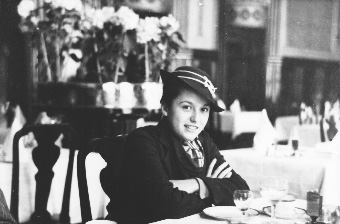
At 14, with her guardian, she toured the schools in Michigan where she could get her education. The choice was quickly made. She was passionate about drawing and architecture. She unhesitatingly opted for Kingswood, the newly opened girls’ school at Cranbrook. Already very gifted in drawing and set design, she would respond to anyone asking what she wanted to do as a profession later: “I want to design a house”. A double-meaning answer, perhaps premonitory.
Another wink of fate: the Cranbrook Academy of Art, which she would later attend, located on the same campus as her girls’ school, had as its director the highly famous Finnish architect Eliel Saarinen, who was none other than the father of future designer Eero Saarinen, the inventor of the Tulip chair, who would work with Hans Knoll in the 40s. He was also the man Florence would consider her big brother her whole life.
Because Eliel Saarinen, the director of the Cranbrook Academy of Art, charmed by this student—who was highly spoken of and wished to become an architect—soon met this rare gem and took her under his wing. The orphan then no longer merely had the support of a guardian chosen by her family upon her parents’ death, but she had just found another family. And not just any family! One that perfectly suited her life’s purpose! With the Saarinens, Florence traveled to Finland, of course, but also throughout Europe, and thus met all the leading figures of the modern movement in design, architecture, art, etc. She would be both their student and their protégé. There was no doubt she would know how to call upon these artists, designers, and architects when she became Hans Knoll’s alter ego…
Episode 5
Florence’s apprenticeship in Michigan and Hans’s spirit in NYC
But for now, Florence was studying with her godfather and professor Eliel Saarinen. Having entered the school he directed, the Cranbrook Academy of Art, in 1934. Then, she successively joined the architecture school at Columbia University in NYC and the Architectural Association in London, notably with Charles Eames as a professor. Afterwards, she worked near Boston, in Cambridge, with Gropius, Harrison, and Breuer.
Suffice to say that Florence was trained by the best professors and masters, and that she went through all disciplines: architecture, painting, sculpture, woodworking, metalwork, textiles, and ceramics… She would later say: “this apprenticeship developed my ability to face all the problems I would be confronted with a few years later at Knoll“.
Of this dashing and enthusiastic young German Hans Knoll, who was blazing his trail in industrial design, she undoubtedly heard tell. Imagine, he managed to convince the director of the Museum of Modern Art in NYC to create an Industrial Design Department! The credo was already this: design is a guarantee of social progress! In the process, exhibitions and competitions were organized, prizes were awarded on the theme “everyday objects of American design for under ten dollars,” alongside partnerships with the Bloomingdale’s department store. How could Florence not be aware?
Organic design was also positioning itself on the front line, or rather imposing itself, due to the war in Europe! Since no more furniture imports from Germany were possible. A competition was launched in November 1940 on the theme Organic Design in Home Furnishings. Its rules might make one smile today, though: “the furniture sector has seen no significant progress in recent years. Yet, our way of life is evolving. We need a new approach and a new style“.
The competition exceeded all expectations for success, and the two super winners were named Charles Eames and Eero Saarinen – Well, well, the son of orphan Florence’s protector… She had not yet met Hans, but she must certainly have heard a lot about him… Patience!
As for Factory N° 1 that Hans Knoll had created in 1938, a year after arriving in New York, it was developing and expanding, culminating in the opening of a factory in Pennsylvania, in East Greenville. There were many German emigrants there who knew how to work…
THE MEETING OF FLORENCE SCHUST AND HANS KNOLL
In 1941, Florence arrived in New York from Boston with the hope of being hired as an architect. She was 24 years old. She was beautiful and elegant. But in this essentially male world, it wasn’t easy to make a mark, especially as a female architect! In the firms that employed her, she was often the only woman working, and she practically only handled the few interior decoration commissions…
Thus it was that in 1943, she met Hans. Between them, there was a spark. On the few projects they collaborated on together, they were already being called Hans and Shu… There was romance in the air.
Then finally came her first mission solely for Knoll: the layout of the office for the American Secretary of War.
When the army called Hans Knoll’s partner, Jens Risom, to its ranks that same year, Florence Schust made a notable entry into the Knoll company. She was hired full-time.
Returning from the war in late 1945, Risom found the atmosphere of the Knoll company changed, mainly due to the growing influence of Florence Schust, he would say. It seemed that his tastes and Schust’s were then incompatible. He preferred the soft, comforting aesthetics of his Scandinavian origins, even tinged with American popular culture, whereas Florence, trained by Bauhaus masters, swore only by functionality and minimalism. Exit Jens Risom from the Knoll adventure.
Episode 6
The love of design and love itself
Passionate about architecture and furniture, eager for new forms, innovative materials, Florence and Hans worked tirelessly to optimize manufacturing techniques, integrating new materials: teak, walnut, marble, steel… They wanted to furnish America. Quite a program! And in these wartime days, they sought ways to make the most of available materials… For example, when textiles were lacking, Florence “fell back” on tweed, before creating her own fabrics. Her first major client: the offices of Rockefeller Center. For which, failing to find what she wanted—namely, padded armrests more luxurious than simple wooden ones—she designed the Model 43 armchair herself. She collaborated then with Wallace K. Harrison, the architect of the Rockefeller exactly, but also of the United Nations headquarters and the Lincoln Center. The one she had worked with in Cambridge in 1940.
Florence and Hans were inseparable… One could hardly find a better-matched couple… So, as old tales often end… “they got married” … But had no children. Aside from Knoll…
They married in 1946 and renamed their company Knoll Associates.
Building on its momentum, the American company prepared to set up factories in France and soon in Germany. Hans dreamed indeed of returning to his country as a victor. Did he want to thank his father for pushing him to flee Nazi Germany? Did he intend to compete with his father’s company? Did he want to make him proud of his success? On this, little is known. Except that his father, Walter Knoll, was indeed impressed! For his son to succeed in producing and selling modern furniture in the USA and Europe, hats off! After all, if Hans wanted to develop his company in Europe, perhaps it was simply because he wished to bring the modern movement back to where it came from: Europe.
GLOBAL DESIGN BEFORE ITS TIME
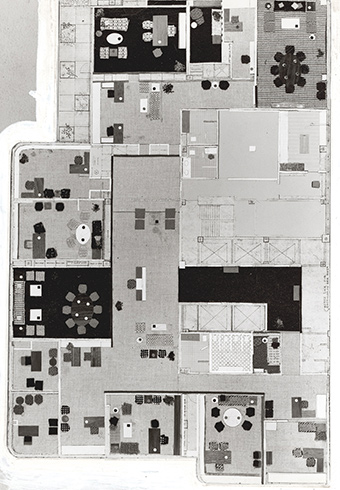
Florence, meanwhile, directed the Knoll Planning Unit, an interior architecture and design office aimed at businesses. It would be highly influential in the Post-War era. It was a department where design was at the center of everything and where everything was taken charge of, global design as we would call it today. This holistic approach, unique at the time, challenged the traditional way of working and integrated all trades: space, architecture, design, production, decoration, aesthetics, functionality, layout, furniture, fabrics, graphics, and advertising.
It was unique and also revolutionary, this way of arranging intimate objects, plants, photos, paintings in the professional sphere. Utilizing checks, stripes, weaves… “It was crazy at that time to imagine offices that had the warmth of a home”, said Demetrio Apolloni, who was president of Knoll Europe.
Florence Knoll’s team worked in immersion and presented highly detailed scale models to clients. Florence’s models were recognizable among all. They were true dollhouses, complete with samples of wood veneers, fabrics, wall coverings, and paints.
Then, she created the textile department to develop the upholsteries herself and meet demand very exactly. She also invented the presentation of fabrics in small fan decks of samples, which would become a standard.
Thus, in the 1950s and 1960s, Knoll would dust off a good number of flagship American companies such as IBM, General Motors, or CBS. Gone were the corridors that ate up space and compartmentalized exchanges. The offices were open plan…
Episode 7
1948 and already a success…
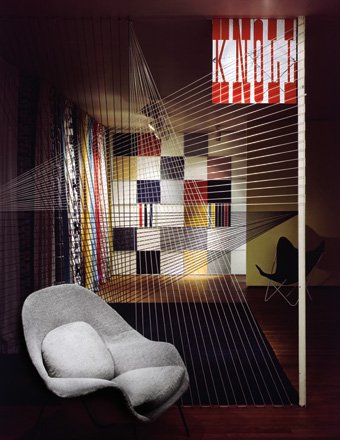
Florence redesigned the NYC showroom at 601 Madison Avenue, which Hans had opened right after arriving in the New World…
The result was surprising. It would introduce the Knoll brand to the general public. “At that time, showrooms were nothing more than warehouses… no style, just furniture lined up. But at Knoll, you felt right at home” (designer Richard Schultz). CBS President Frank Stanton, for whom Florence Knoll designed offices in 1952, would say: “There were few such beautiful showrooms. Knoll had set the bar very high“. Other showrooms would follow in the 50s, in Chicago, San Francisco, and Dallas, and a second one in NYC.
WITH THE GREATEST DESIGNERS
Designers, architects, and sculptors from around the world were solicited. “We didn’t work with them for the money,” recounted designer Richard Schultz in 2019, then 93 years old.
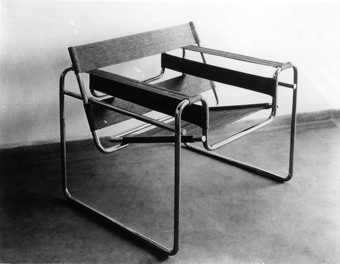
Florence Knoll obtained the exclusive distribution rights from Mies and Breuer for their most legendary design pieces, such as the Barcelona Chair (1929) or the Wassily chair (1925). Eero Saarinen developed the Womb Chair, a “womb-armchair” at the request of the woman they continued to call Shu. She indeed wanted “a seating that would be like a basket full of pillows, something she could curl up in”.
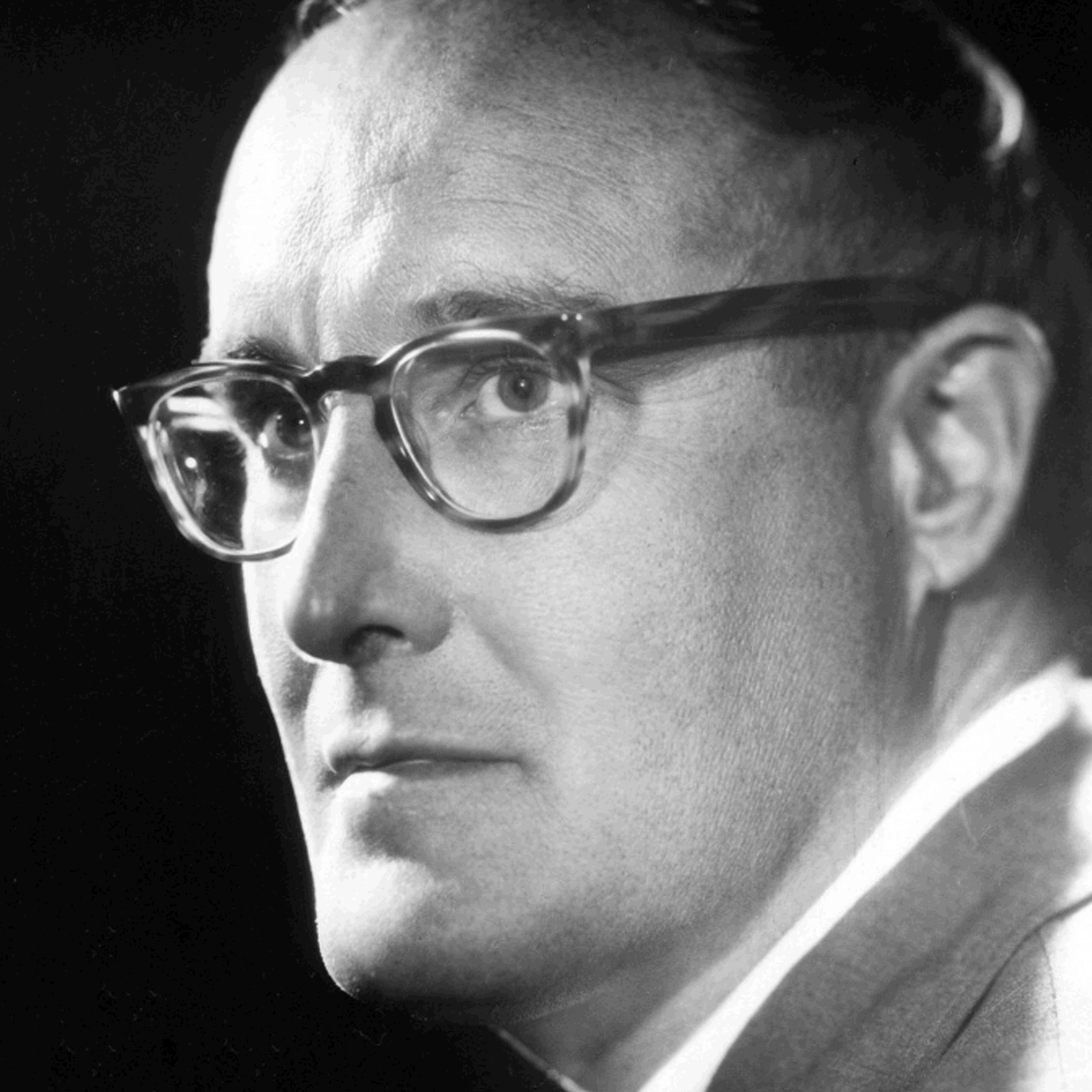
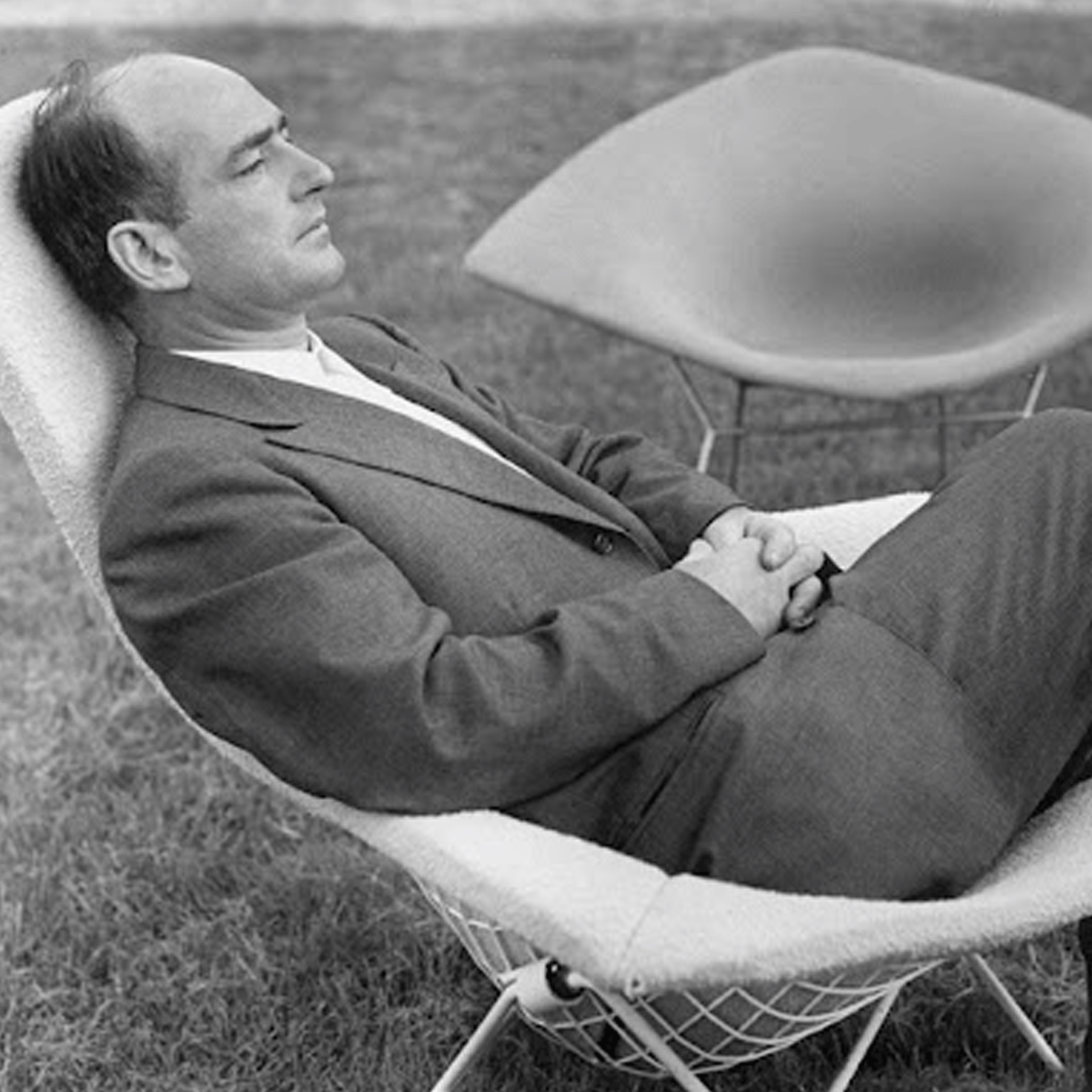
The famous Diamond Chair (1952) would also enter the catalog. Hans and Florence asked the Italian painter, sculptor, and furniture designer, who had emigrated to the USA at age 15, Harry Bertoia, to work on “something interesting”, with no restrictions or directions. Uninspired at first, Bertoia decided to “listen to his body” and experimented with wire, seemingly an unlikely choice for a chair. But he ultimately created a piece that was as comfortable as it was elegant.
In her new offices on Madison Avenue, Florence also designed furniture. Her “Relaxed Sofa” is still produced today. But despite her hierarchical position, in an era when the only women encountered in the neighborhood’s offices were generally secretaries, when presenting her own production, she merely said: “I needed furniture pieces for a job and they didn’t exist.”
AND SOON, GLORY!
In 1951, Knoll Associates became Knoll International. And for good reason. The first foreign office finally opened in Germany. Hans’s dream of returning to his homeland was accomplished! And it was in his hometown of Stuttgart! And for the Knolls, Europe also meant France, where the first retail boutique opened in Paris. Well, a very small boutique in an alleyway next to the Saint-Germain-des-Prés church. Actually, the church’s little annex!
Once again, it was revolutionary: furniture presented like in a living room, flowers, green plants, gravel covering the floor, curtains dressing the windows, the colors pink, orange, and red dominating. Unheard of in the fifties!
The residential furniture market was launched. It would be a success! Soon the sector would represent half of Knoll’s sales. And furnishing with Knoll very quickly became the height of chic. Granted, not for every budget, of course. And this didn’t happen by magic. At the opening of the Parisian showroom, people still wondered a bit what this strange shop was. A florist? An office?
Across the Atlantic, the success of the Knoll Planning Unit showed no signs of waning! To the point that advertising was unnecessary and the list of public and private companies calling upon the Knoll style kept growing…
Hans Knoll was now an empire builder. After Germany, France, and Paris, he wanted to continue conquering Europe but not only that. He dreamed of Cuba! And in the following years, the dream was fulfilled! Knoll won the contract to fit out the Cuban embassy. The furniture would be manufactured in France and shipped to the Caribbean island.
Episode 8
1955, Cuba, the tragedy and Florence’s new life
October 1955. Hans goes alone to Cuba to supervise the site.
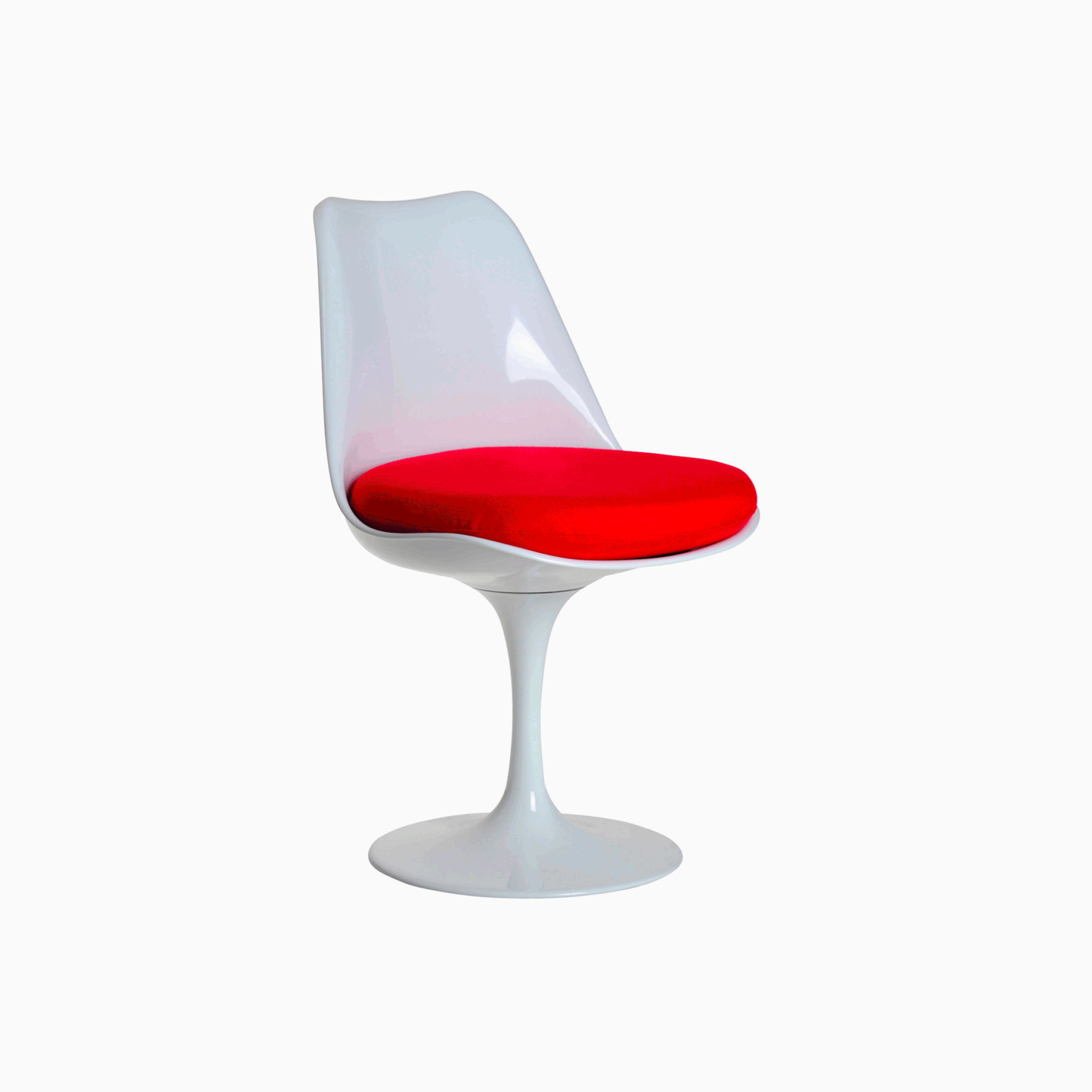
Meanwhile, in New York, one of Knoll’s collaborators, the designer Don Petitt, who had been working for a few years with Eero Saarinen to evaluate and refine the design of his Tulip chair, was there, with the Finnish designer—the spiritual big brother, we remember, of Florence Schust. They were discussing with plastics manufacturers capable of producing the chair… This chair, Eero Saarinen had been talking about it to Hans Knoll for more than two years. In November ’54, the two men had written to each other, because Eero Saarinen, having become a star, had not collaborated with the brand for three years due to lack of time, overwhelmed by commissions. He was then overjoyed to work with the Knolls again, especially since he was certain that the idea he was going to propose to Hans was brilliant, and that it “would bring Herman Miller [the competing publisher] to their knees!”, he wrote… This idea was the Tulip, the famous single-pedestal chair! Made of PVC mounted on a stem, the chair, manufactured in a single piece, blooming like a corolla, is today the star of vintage living rooms! It also holds a place of honor at the MoMA in NYC and is part of the permanent collections of the Vitra Design Museum in Basel.
But in the middle of the night on October 8, 1955, tragedy struck. Eero learned of it with shock in his New York hotel room. The tragedy, which had just struck Hans at the height of his ascent at 41, shook the design world and above all his wife, Florence. But who could believe it was real?
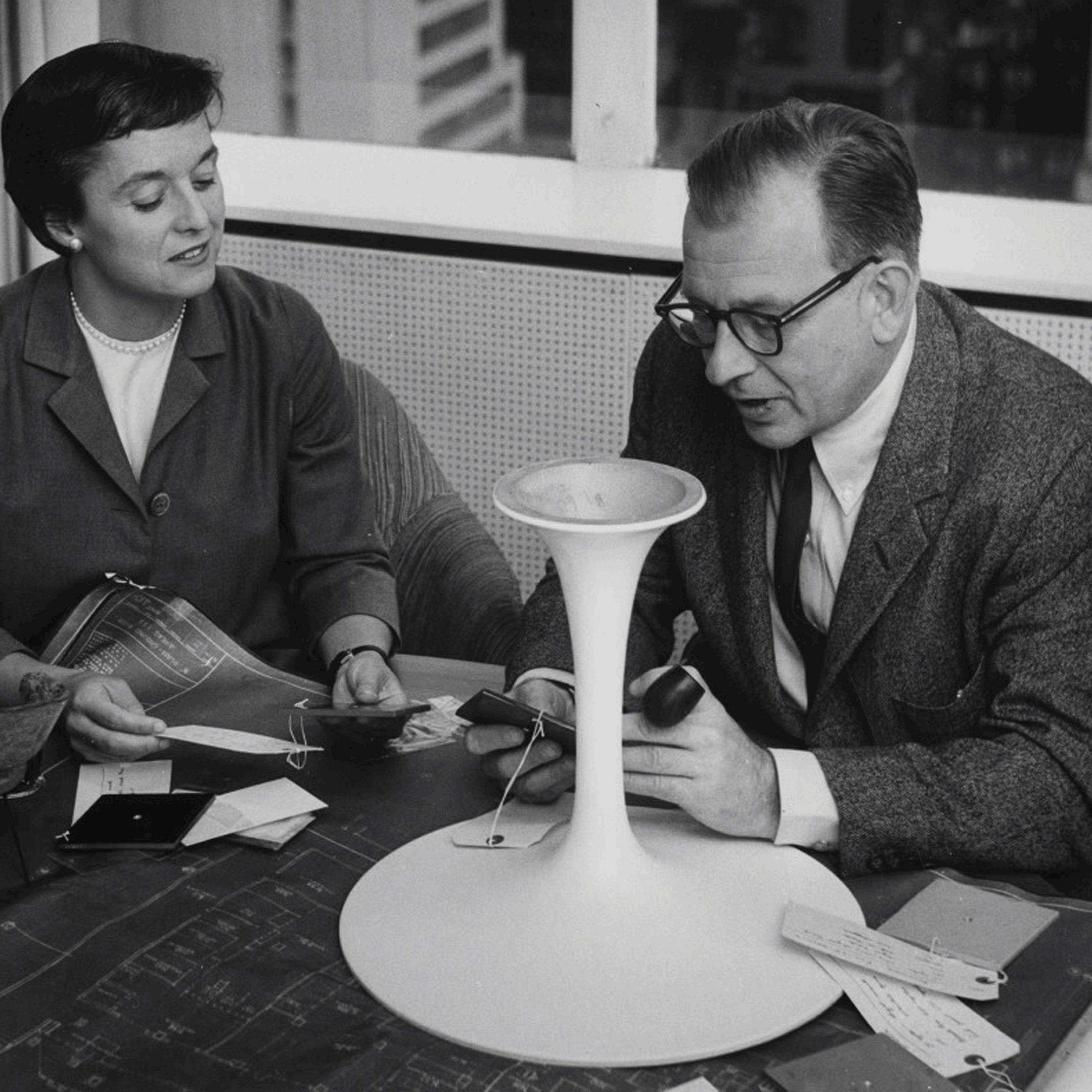
THE AFTERMATH OF TRAGEDY
Hans had just died in Cuba.
The car he was in in the Cuban capital stopped at a traffic light, at the bottom of a slope, when a truck whose brakes had probably failed sped down the slope and crashed into their car with a devastating impact causing a terrible fire. Hans died instantly, as did the young woman responsible for the State Department project in Havana.
Florence nevertheless continued the adventure. She single-handedly directed Knoll International and Knoll Textiles, and of course the Planning Unit department for businesses. She continued to publish numerous pieces that would become bestsellers. Notably Eero Saarinen’s Tulip Chair.
In 1957, she signed a contract for the Planning Unit with the First National Bank of Miami. In 1958, Knoll supplied 800 chairs for the UNESCO auditorium in Paris. These were the Conference chairs by Eero Saarinen (the auditorium was renovated in 2018 with the same chairs adapted to new standards).
In Paris, they moved to a larger and more visible showroom, in the Parisian district that would become the Design Triangle, on Boulevard Saint-Germain (7th).
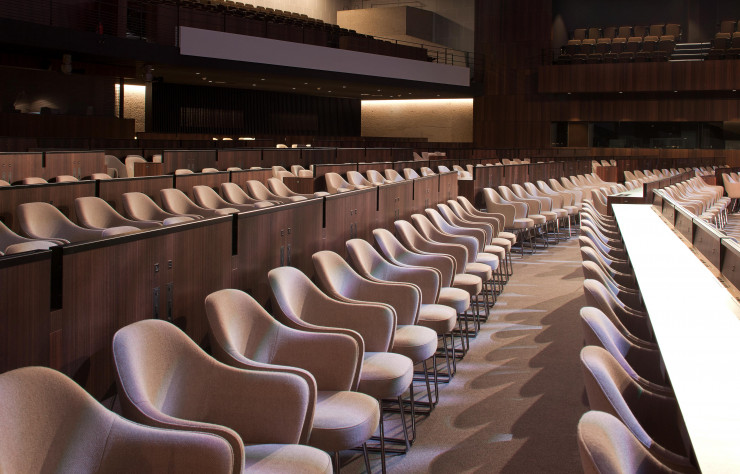
1958 – THE KNOLL COMPANY IS STILL ON TOP BUT A NEW LIFE BEGINS FOR FLORENCE
The Knoll company, with Florence at its head, was flourishing. But for the orphan and young widow, still as passionate about creation as ever, another life was opening up! During the First National Bank fitting-out project in Miami, something happened. Its director, Harry Hood Bassett, and Florence Knoll fell in love.
They got married. She continued to be full of projects and to edit a wealth of Knoll products: furniture, chairs, desks, etc. For more than 7 years, she would commute between NY and Miami.
FLOENCE KNOLL DISTANCES HERSELF AND PERMANENTLY LEAVES KNOLL
But as early as 1959, she gradually withdrew. She sold the business side of Knoll to the Art Metal Construction Company, while nevertheless remaining in key positions within the company. She was then president of the Knoll divisions and director of design and research at Art Metal.
But upon the death of the head of Art Metal the following year, she retained only the direction of the “Planning Unit”, “her baby”.
Episode 9
Knoll without Florence
Miami. Without fanfare or trumpets. From then on, she kept as low a profile as possible. Occasionally accepting a few private clients but refusing almost all interviews and public appearances. Yet, even today, the brand is nowhere near forgetting her… Nearly forty years after leaving Knoll, she would simply tell Metropolis magazine: “I’ve had an extraordinary life when you think about it. I grew up in Cranbrook, I lived with the Saarinen family (…)”.
She would be seen fleetingly in Paris in 1967. The architect and designer Marc Held exhibited his Culbuto armchair in his boutique on rue de Seine, which Yves Vidal, then director of Knoll France, liked very much. A deal was struck for three models. But at Knoll, there was no consensus. Rather dissension. Yves Vidal, very good friends with Florence Knoll, who had already sold her shares but retained enormous authority, asked her to come and see to decide… She arrived, saw the three armchairs, sat down and said: “It’s wonderful!” Today, the Culbuto is a cult chair. Even if at the time, very few were sold, confides Marc Held…
She would be seen again in 1972 in Paris, at the Louvre, when Knoll exhibited its models under the leadership of Jean Vidal. Unheard of at the time for a private company! The furniture presented was “imprisoned” in stacked plexiglass cubes, an idea that Florence found superb.
In 2003, it would be more official, and this time it would be in the United States. President George W. Bush awarded Florence Knoll Bassett the highest national honor for artistic excellence, the National Medal of Arts. She would still say as simply: “I am not a designer. I just did the potatoes that go with the meat…”.
Who knows then what she thought when Knoll brought her to the forefront in 2012, with the sofa she had created in 1954, dressing it for the occasion in cashmere and releasing it in an ultra-limited edition, like a tribute…
And then, in 2017, Florence Knoll Bassett just turned 100! The president of Knoll Europe, Demetrio Apolloni, then had a touching thought for her. Like all the people working at the Foligno factory in Umbria, Italy, where all the design icons published by Knoll are manufactured. Here, the photo of the founding couple is not about to be taken down. It always watches over the craftsmen.
Marc Held
It all began in the early 1960s. After working as a physical education teacher and then as a photographer in the wake of Doisneau and Brassaï, Marc Held captured demonstrations, summer camps, the first public housing projects in working-class suburbs, and the jazz singers performing in the clubs of Paris’s Latin Quarter. He also photographed the farmers and harvests of Corrèze, one of the regions closest to his heart, where he spent the years of the Occupation with his mother.
He then became a designer and architect, driven as much by artistic and intellectual curiosity as by a passion for technology and craftsmanship.
From that point on, he explored every facet of architecture and design: Scandinavian design, Alvar Aalto, the Bauhaus movement, Austrian designer Carl Auböck, Italian architect and designer Gio Ponti, and French designer Joseph-André Motte. Along this journey, he made countless stops in Finland, Denmark, and Italy.
“I experienced my first revelation when I visited Le Corbusier’s Ronchamp Chapel in Haute-Saône, but the greatest shock came when I discovered Andrea Palladio’s Villa Rotonda near Vicenza, in the Veneto region.”
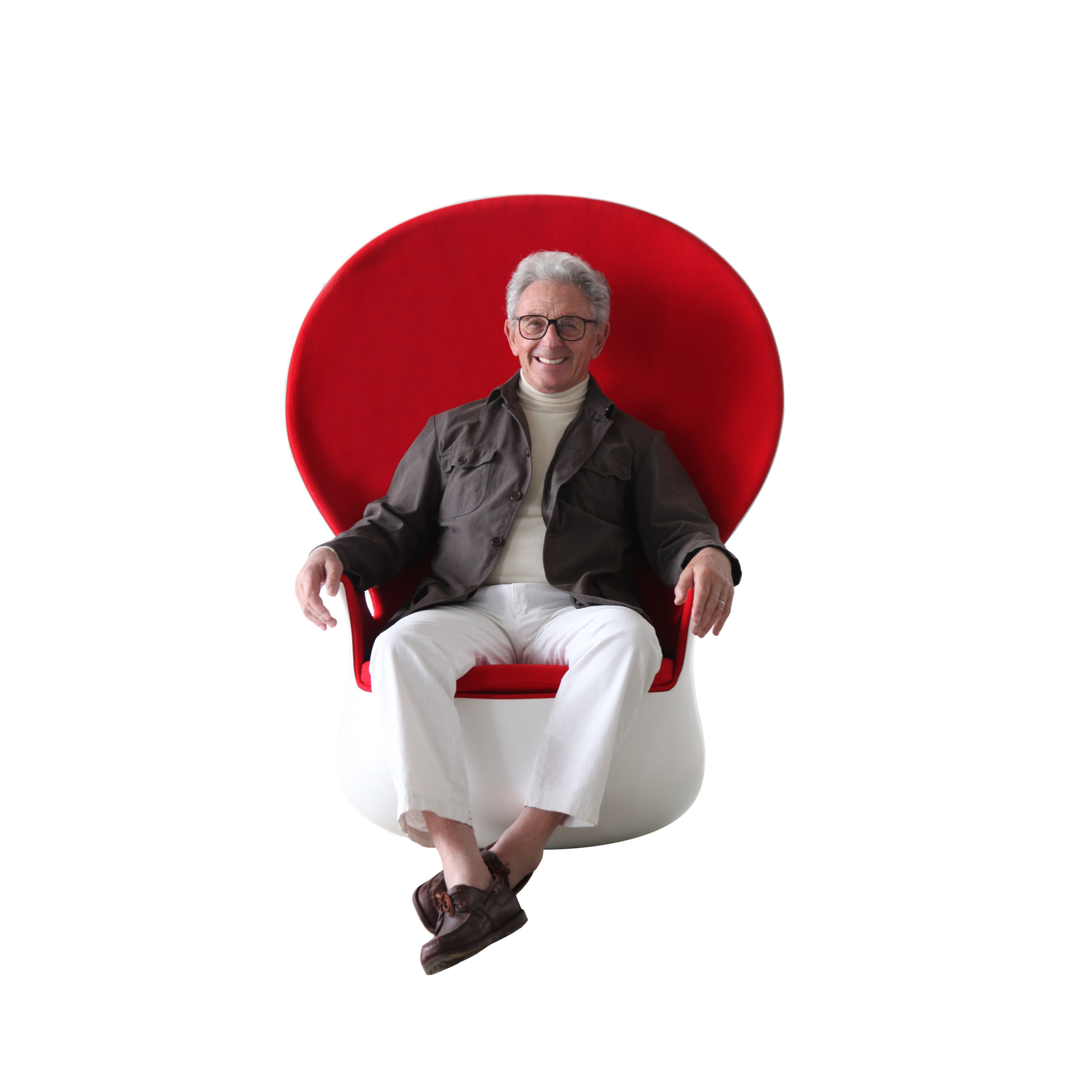
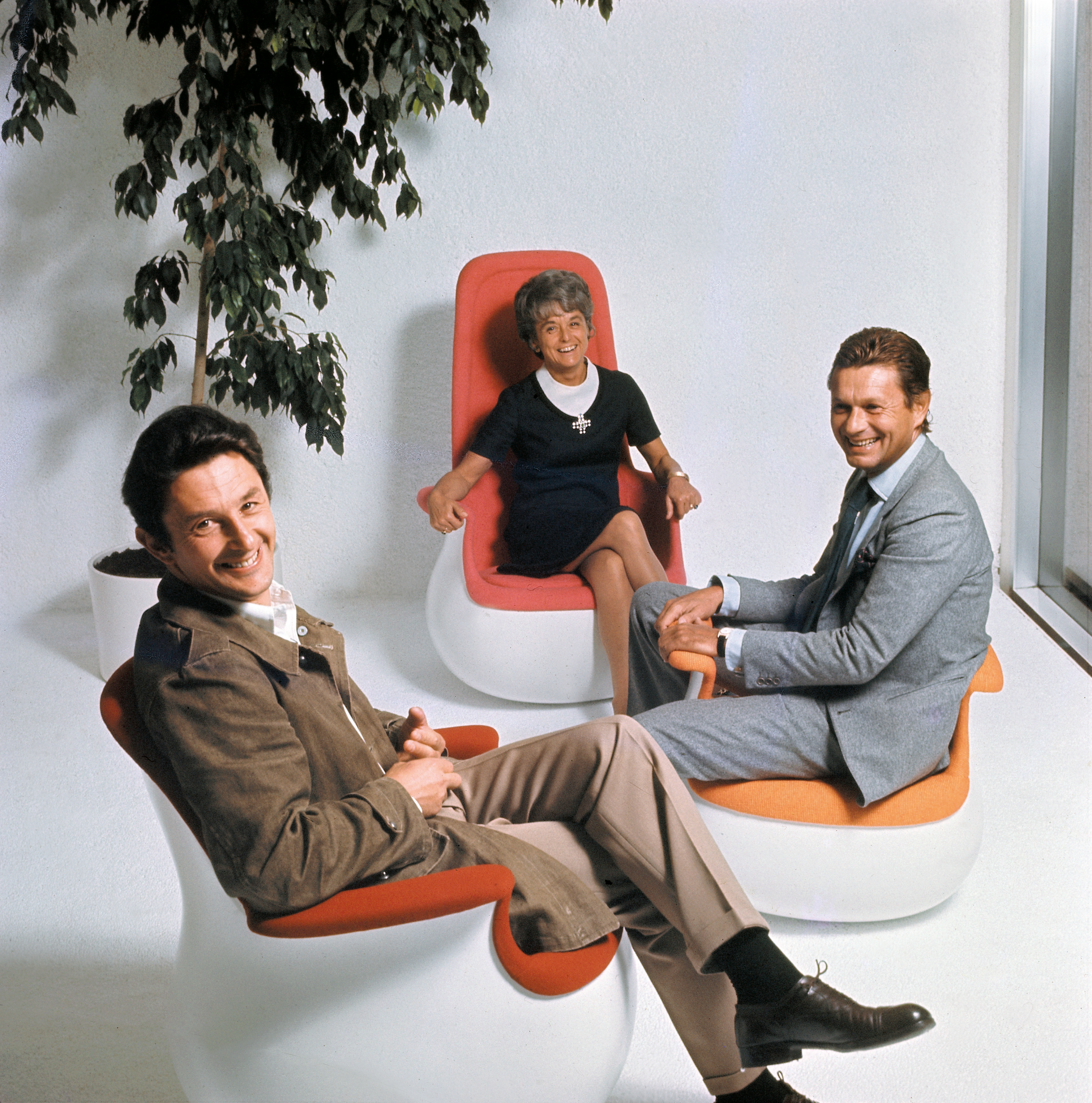
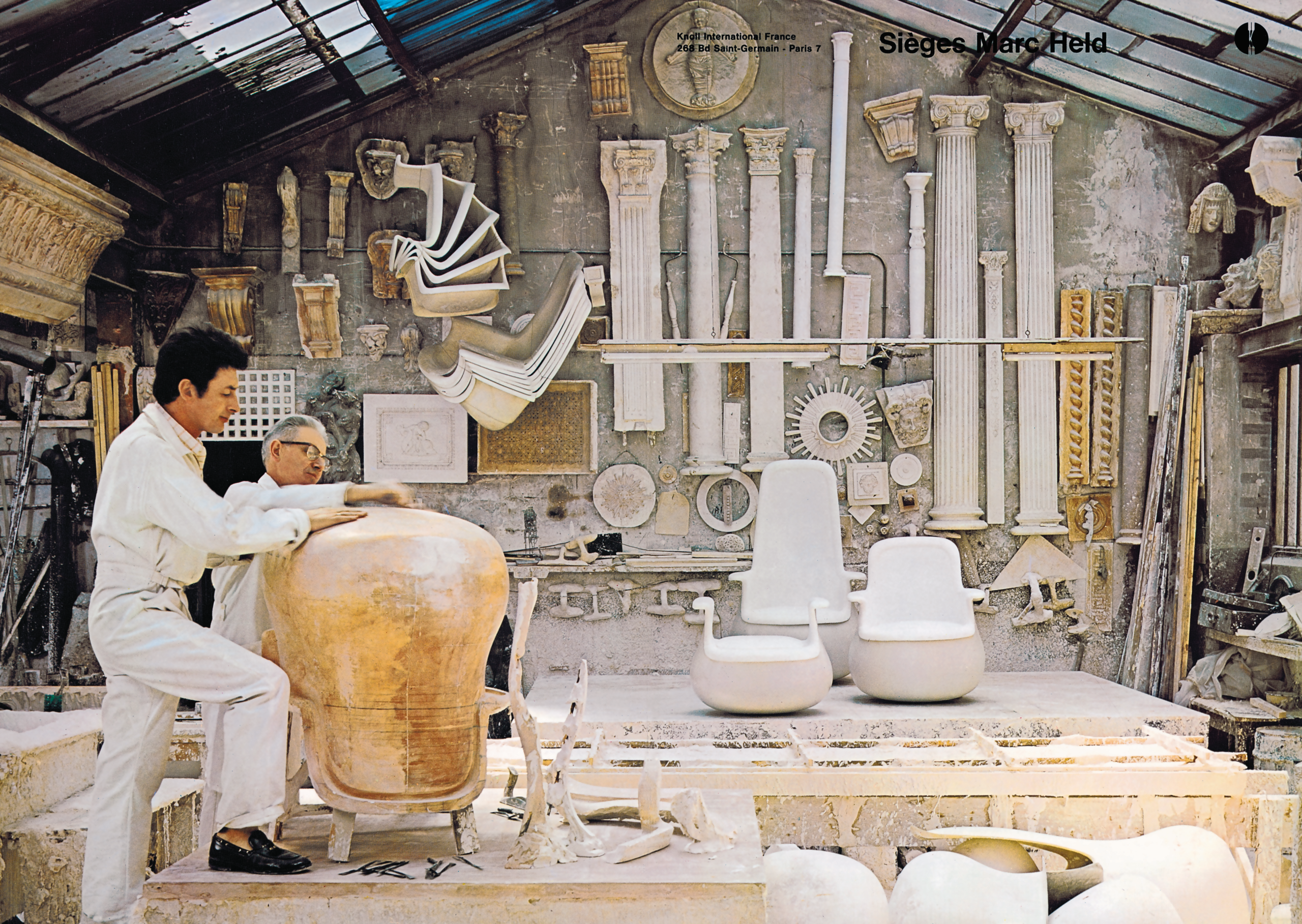
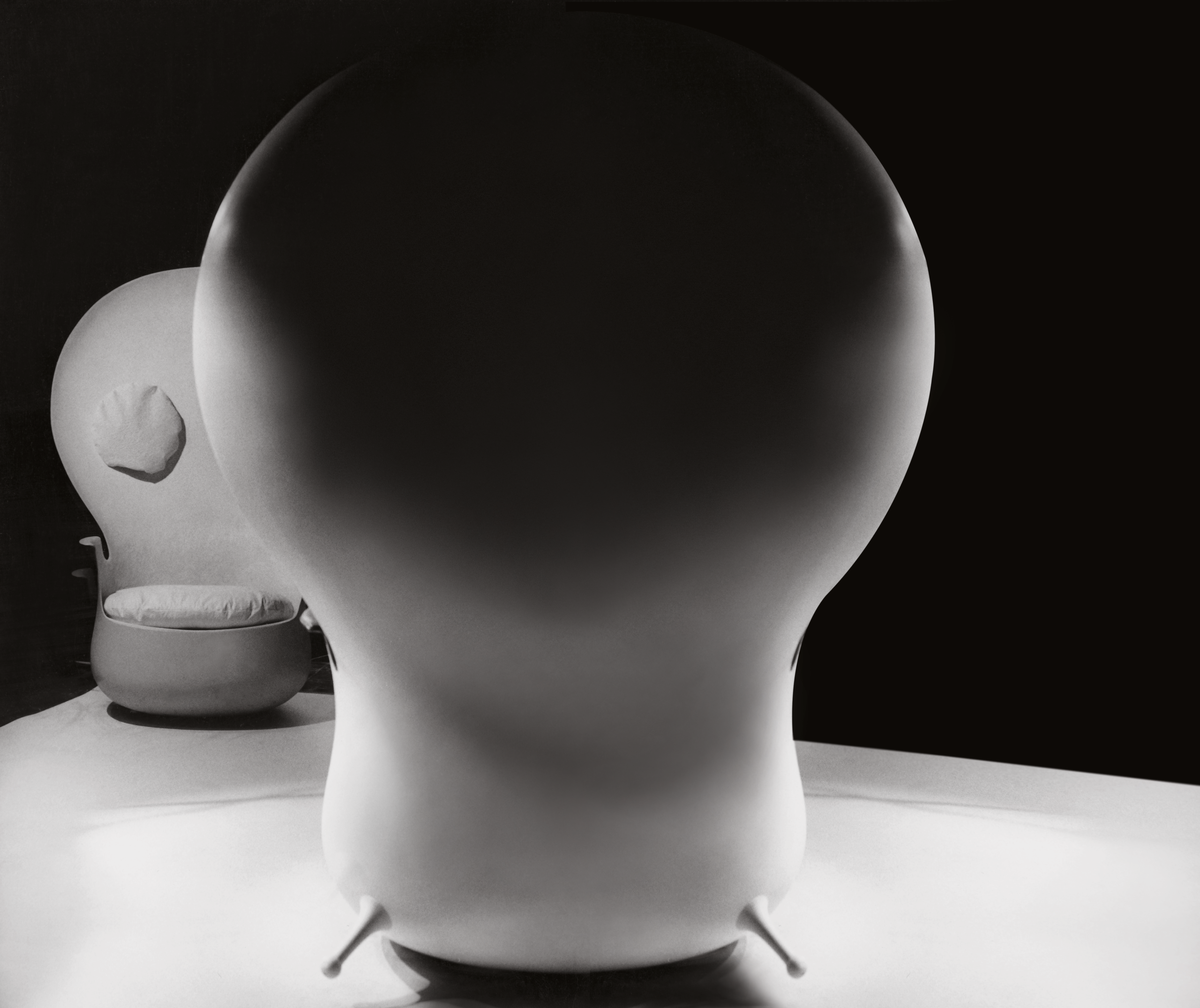
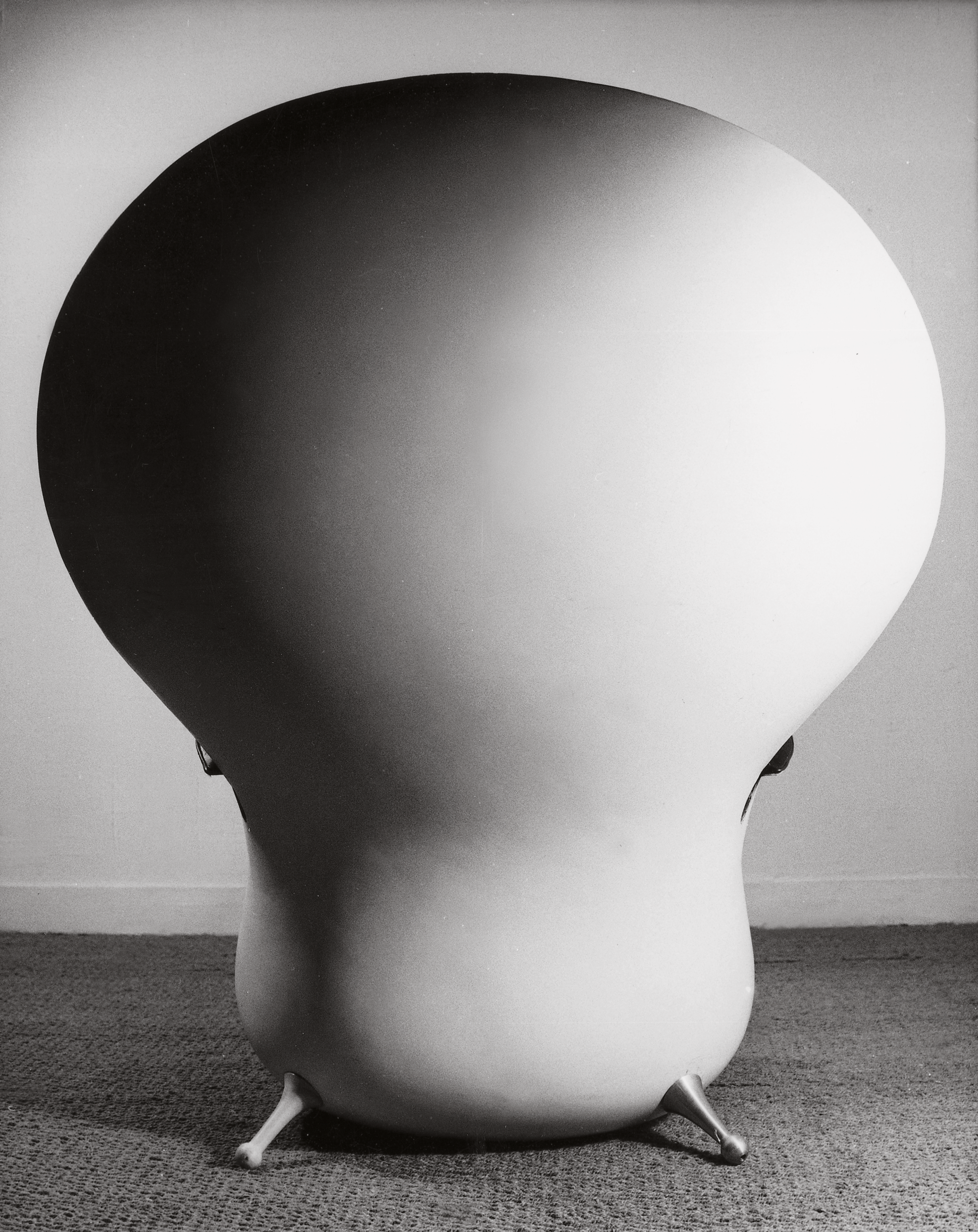
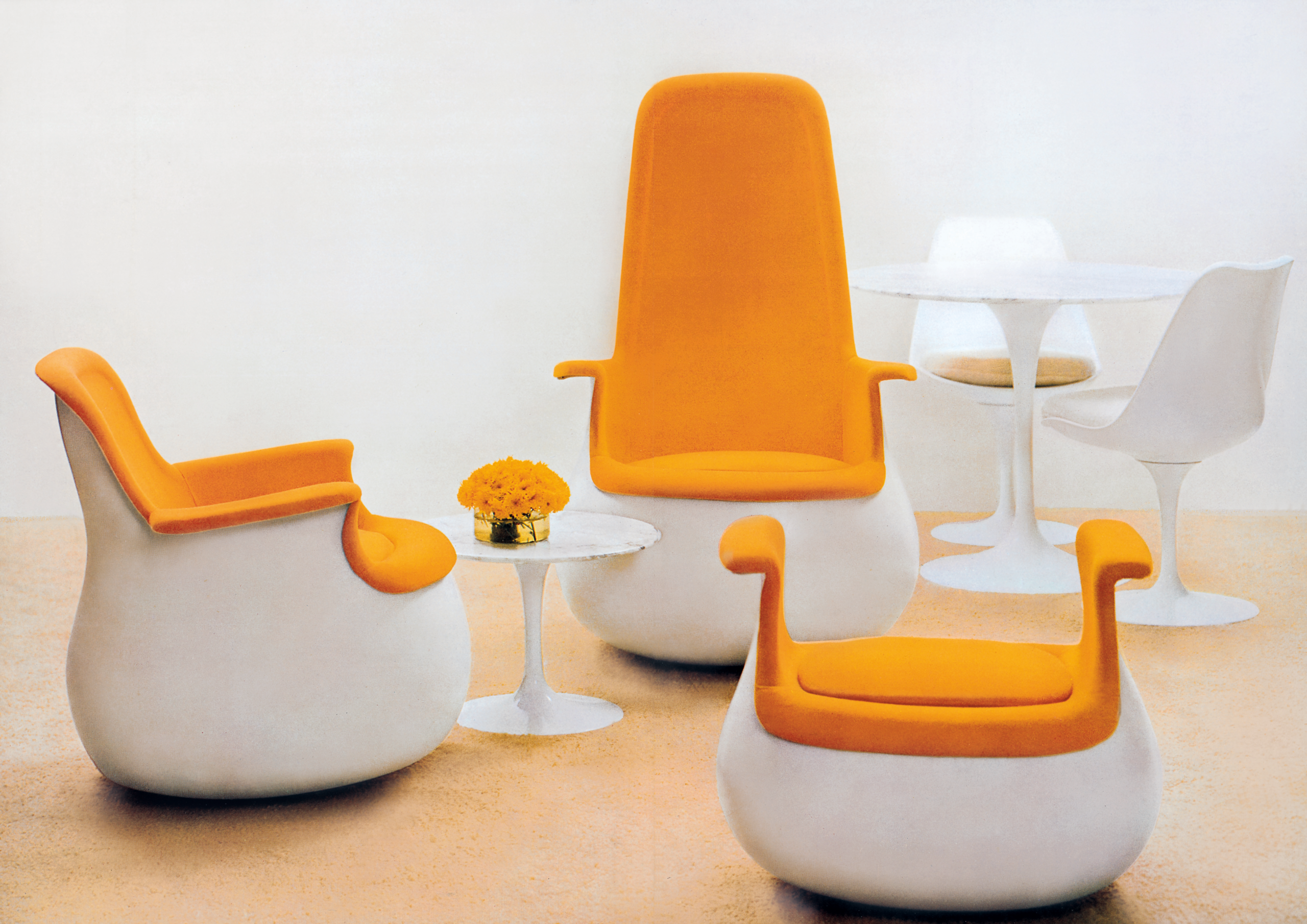
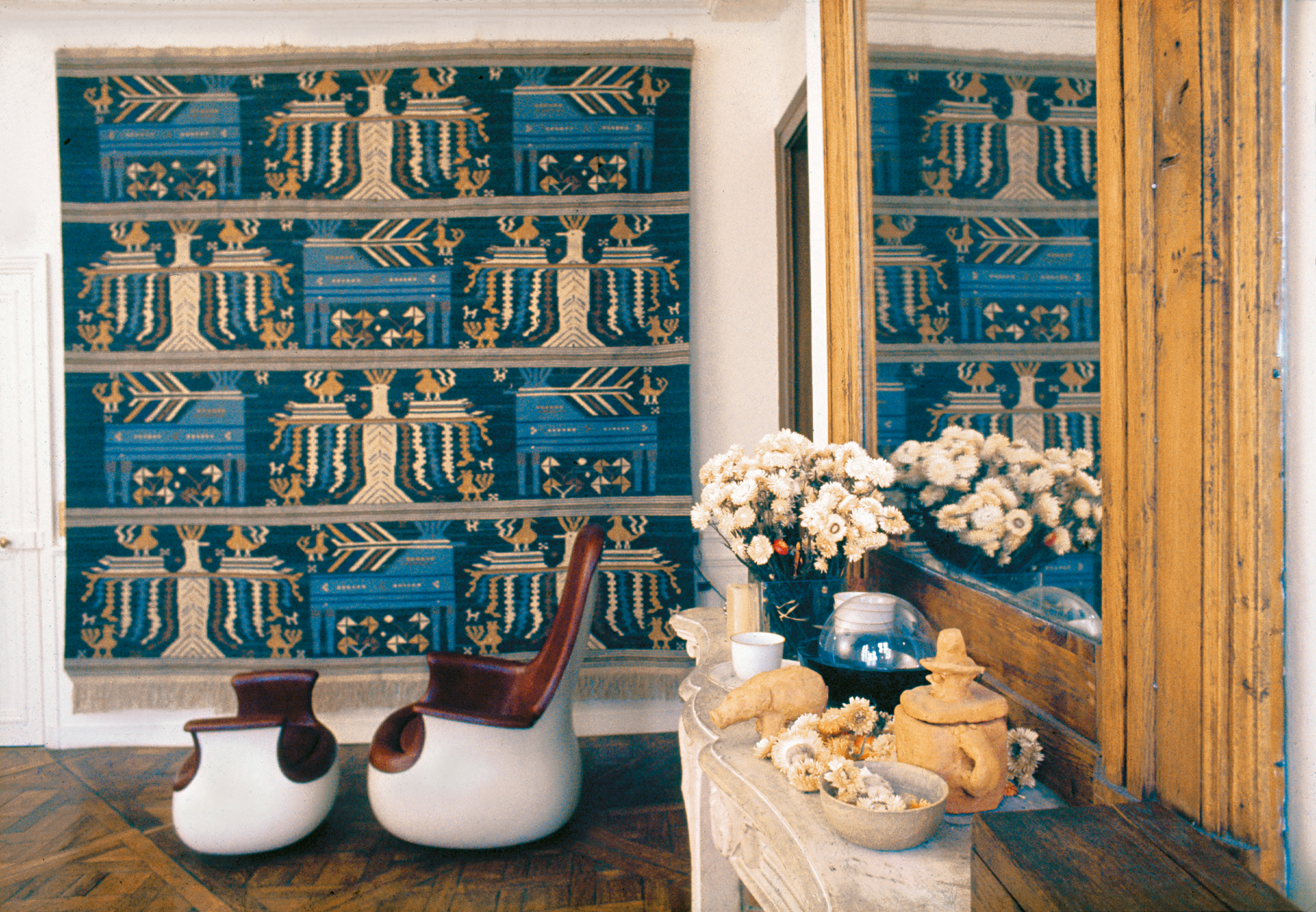
Et le culbuto, dans tout ça ? Depuis 1985, le fauteuil fait partie des collections permanentes du musée des Arts décoratifs de Paris et est devenu un objet culte… et rare.
Marc Held se souvient …
I then decided—going into debt in the process—to invest in a mould and produce five pieces. I had them upholstered in playful materials, including faux fur, and displayed them in the window of L’Échoppe in a lively staging orchestrated by a few charming friends who sat on the five chairs.
Then came the Saint-Germain-des-Prés Arts Festival in 1967, and thousands of people crowded around to witness the spectacle—what today we would call a performance. Among them was Yves Vidal, President of Knoll France, who later returned with Knoll’s worldwide president, Bobby Cadwallader, and asked me to develop a collection of three or four armchairs.
With a three-year contract in hand, I threw myself into the work, collaborating tirelessly with a model-maker to eliminate the need for counterweights and rear stops and to refine the original form of the chair, which I felt was perhaps a little too baroque.
Once the three armchairs were completed, Yves Vidal exhibited them in Knoll’s showroom on Boulevard Saint-Germain and invited a delegation from the United States. A group of men in dark suits arrived, visibly unimpressed. They were not enthusiastic about these new forms, which they considered extravagant.
Vidal then called in Florence Knoll. She had all but left the company, yet remained its great ‘Princess Chu.’ She flew in directly from New York. My knees were shaking.
She approached the display window, pressed her nose to the glass, and smiled. Then she entered, sat down in one of the chairs, radiant, while Yves Vidal sat in another.
And she gave her approval.
It was a defining moment.
Yet the commercial launch was soon overshadowed by the oil crisis, the growing rejection of plastics, and the return of wood as the material of choice. Very few of the chairs were sold, although I never learned exactly how many.”
A NEW ERA FOR KNOLL
In any case, Florence’s departure heralded a new era for the company. In the 50s, Knoll, which did not have a “work of art” image, sold for less than other brands but a lot to a clientele, at least in France, consisting of young executives and couples from chic Parisian suburbs. However, the brand retained what had built its reputation: rigorous aesthetics, quality and longevity of products, innovation, and creativity. All outside of any notion of fashion.
Then, until the early 1970s, the brand would reach a wealthy, opinion-leading audience. The events it prepared were lavish, especially those organized by the Saint-Germain-des-Prés showroom, where all of Paris flocked.
As for the exhibition of Knoll models in 1972 at the Pavillon Mansart, effectively at the Louvre Museum, it sounded in a way the swan song of a certain era… Nothing would ever be the same again. The decades that followed would prove richer in setbacks than in fortunes.
Episode 10
The dark years and the revival
First of all, Knoll was bought in 1968 by Walter Heller’s financial conglomerate. The firm created by Hans and Florence was certainly only a part of his empire which, moreover, posed no financial problems, but he nevertheless stamped his taste for industrialization upon it, meaning planning, cost controls, etc. Especially since he was going to become a banker, and subject to antitrust law, he was going to have to sell Knoll International. Therefore, putting some order into it was a good thing.
The only optimistic note in the new picture, which was more dark than blue: Knoll’s acquisition of the Italian company Gavina, which marketed and produced the creations of prestigious designers, including Marcel Breuer’s famous Wassily chair, in its factory in Foligno, near Perugia in Italy. It is here, incidentally, along with the Graffignana site, near Milan, that the bulk of European orders are manufactured today.
THE PRICING POLICY AT THE EXPENSE OF CREATION
So, in the 70s, Knoll would attempt to become industrial, or let’s say, a company like any other, where sales and administrative, accounting, and financial management took precedence. This was a considerable change. However, a significant part of Knoll’s success lay in creation. No longer betting everything on it perhaps led to putting it in danger.
Especially since with the moribund economy of the late 70s, sales plummeted. The first tremors of the oil crisis, then the collapse of the wood and furniture industry in the 80s shook the brand. Up until the 1990s, Knoll went through difficult years. Buyouts succeeded one another. In 1977, General Felt Industries; in 1990, Westinghouse Electric Corporation. And in 1995, Warburg Pincus Ventures.
THE AWAKENING OF THE SLEEPING BEAUTY
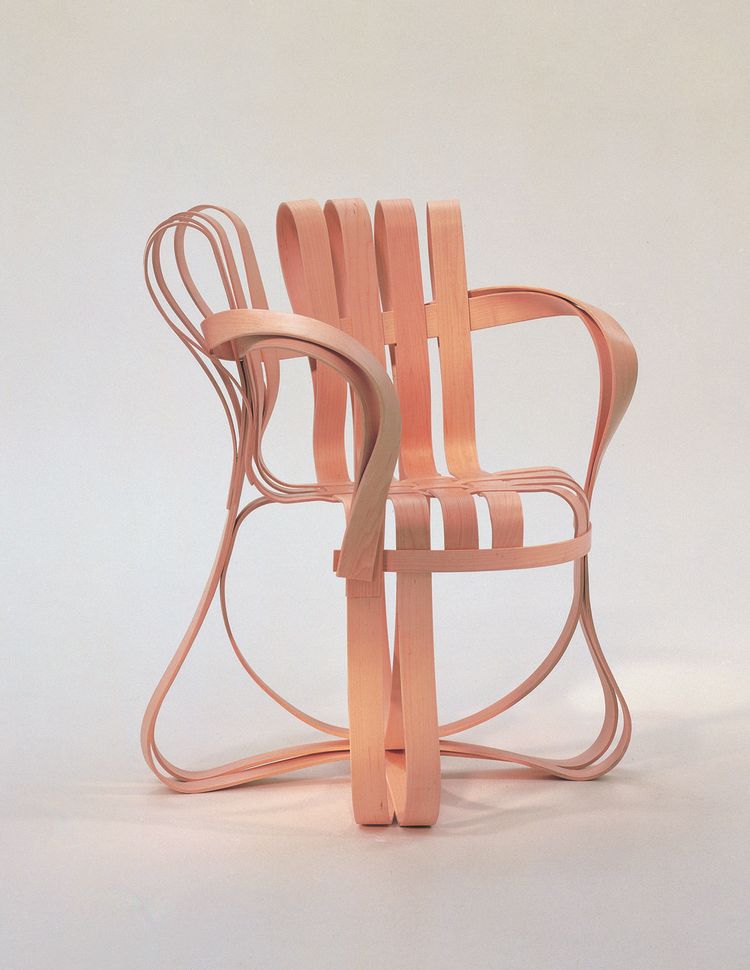
With the 1992 collection of woven bentwood chairs by Frank Gehry, it is true that the firm reconnected with better days.
Perhaps Lionel Pithoud, former director of Knoll France (today director of the furniture division of Re-You), was right when he declared: “ideas as innovative as those of Florence Knoll resist for a long time”.
Yes, but. What if Knoll furniture was too expensive today? In any case, sales were treading water. That is why, in December 2018, Knoll, which nonetheless remains the American giant of design, paid 300 million dollars to acquire Muuto, a young Scandinavian startup.
Muuto, whose more affordable products appeal to the young generation of architects, decorators, and individuals, fits just as well in homes as in the tertiary sector, co-working spaces, or classic offices. Because the boundaries are no longer so airtight between these worlds, seems to suggest Knoll’s American CEO, Andrew Cogan.
Could this be, in keeping with the spirit of Knoll’s founders, the right response to the upheavals in lifestyles and ways of working? The future will tell. In any case, in 2021 Knoll was bought by Herman Miller, the competing publisher, the one that in 1954 designer Eero Saarinen wished to bring to its knees with his new Tulip chair! (see episode 8)!
Meanwhile, in 2019, at the Salone del Mobile in Milan, Knoll celebrated an important anniversary—the centenary of the Bauhaus—and presented, alongside iconic creations, the new collections designed by Piero Lissoni and the British duo Edward Barber and Jay Osgerby.
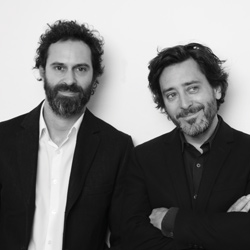
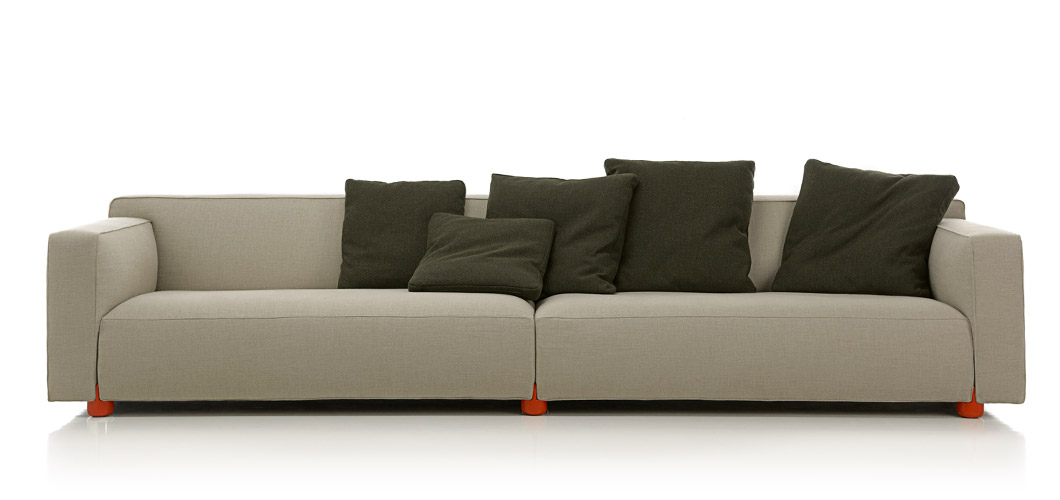
A little later, RBC, a company specializing in contemporary design and furniture, presented the exhibition “Knoll – The Original Design”, which paid tribute to Mies van der Rohe and Eero Saarinen, als of the Bauhaus centenary.o on the occasion
But these two events obviously did not bring Florence Knoll Bassett to Europe… In early 2019, on January 25 exactly, she died in Coral Gables, Florida. She was 101 years old.
Today Florence will tell us nothing more about Knoll. But to find out more, it is possible to go to Washington to consult the Smithsonian. An institution to which Mrs. Knoll Bassett donated all her papers in 2000. These documents were all digitized in 2008 and total more than 1000 images. The funding for the digitization of this collection was provided by the Terra Foundation for American Art.
And Knoll continues its trajectory, with new talents. Because Knoll still inspires and continues to surprise. Because it is always a great honor for a designer to collaborate in a house that counts among its catalog the creations of the most illustrious architects and designers…
UNE QUESTION DE DÉTAILS
Ce qui différencie un bon objet d’un objet exceptionnel, c’est l’attention portée aux détails. Une courbe bien pensée, une texture agréable au toucher, ou encore un mécanisme silencieux font toute la différence à l’usage.
L’importance de l’ergonomie
Un objet, aussi beau soit-il, ne trouvera sa place dans notre quotidien que s’il est agréable à utiliser. L’ergonomie est la clé de voûte de toute création réussie.
En fin de compte, l’histoire des objets qui nous entourent est aussi passionnante que celle de l’humanité elle-même. Ils sont les témoins silencieux de notre évolution.
No Comments