



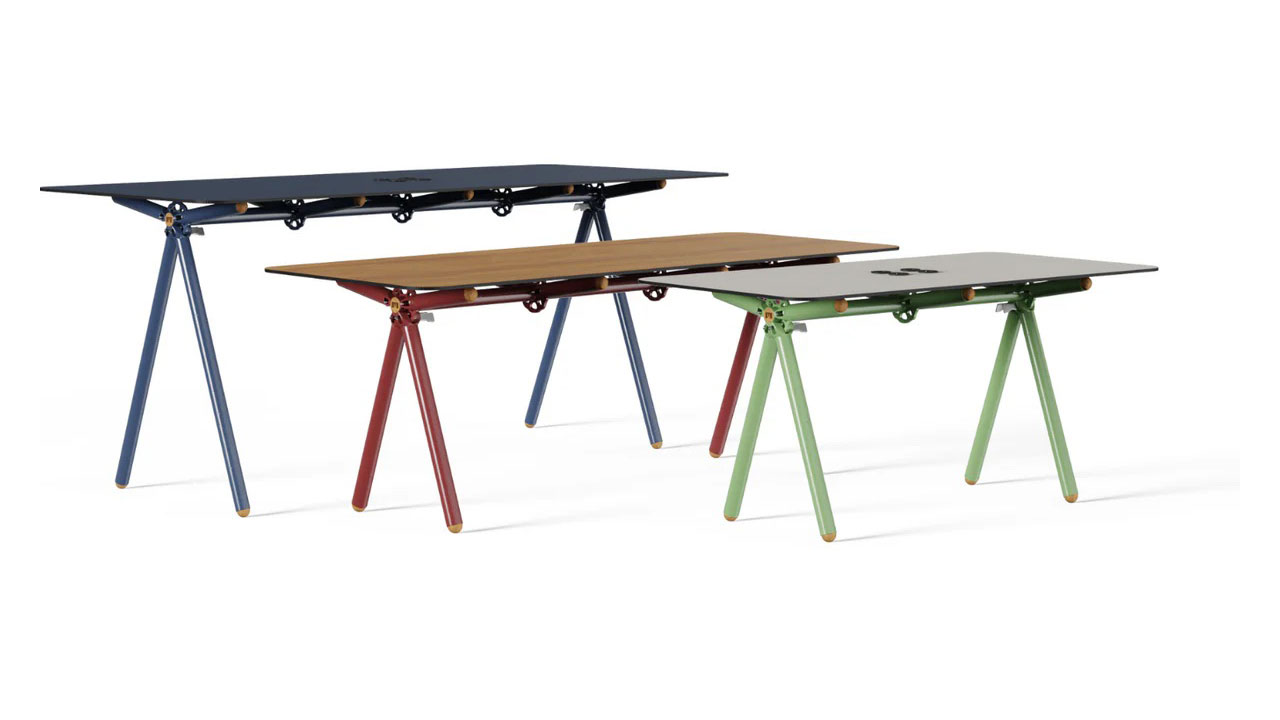
23 Mar Sustainable, ecological and responsible design
SUSTAINABLE DESIGN
SUSTAINABLE &
ECOLOGICAL DESIGN
Responsible design summons designers and consumers more than ever. An awareness and a challenge that fit into an essential circular economy.
Sustainable design is based on fundamental principles: creating products that last, promoting disassembly for recycling, and designing objects with a view to reuse and reducing environmental impact. This is fully in line with a circular economy, where materials are reused, repaired, or recycled, and where sustainability takes precedence over excessive consumption.
The key role of consumers
While the designers of objects are at the heart of this major issue, consumers are no less so. Because in a context where the environment is becoming a central concern, responsible design has a duty to offer solutions that are aesthetic, functional, and ecological. Consumers, by choosing sustainable products, provide unparalleled support to the circular economy and actively participate in the preservation of our planet.
A historical ecological awareness
Sustainable design is an awareness and a challenge that did not emerge yesterday. While there is urgency today, the question is unfortunately not so new, and dates back to the end of the 19th century. British architect William Morris (1834-1896), founder of the Arts and Crafts movement, was already campaigning to use “the decorative arts” to curb “the harmful effects on the natural and domestic environment generated by the industrial revolution”. In particular, he called for “creating a better society from the material production of objects”.
In the 20th century, in the 1970s, the Austro-American designer Victor Papanek said the same thing: “As socially and morally engaged designers, we must respond to the needs of a world that has its back to the wall”. He did not mince words to warn and state loud and clear that: “Humanity’s clock always strikes one minute to midnight”. His pioneering book published in 1971, Design for the Real World, is not only a classic of design history, it is a manifesto for political and ecological design. This is the same warning cry that Geneviève Gallot reissues in a book published in 2020: 70 designers for a sustainable world.
The European framework and eco-design
New developments for Eco-design in Europe. Since April 2024, a new eco-design regulation (ESPR) has been adopted by the European Parliament to regulate durability, recycled content, and recyclability. The European Union, as part of the Green Deal, wants to make products on the European market more sustainable, in particular by facilitating their repair, reuse, and recyclability.
In this context, a Digital Product Passport (DPP) is also planned to be implemented from 2027 for electronic and textile products. This digital passport will give instant access to information on product sustainability, such as composition, the origin of materials, repair possibilities, or end-of-life treatment and environmental performance.
No Comments