




25 Feb THE BISTROT CHAIR
THE BISTRO
CHAIR
If we tell you that the center of Vienna is a UNESCO World Heritage site, you won’t be surprised.
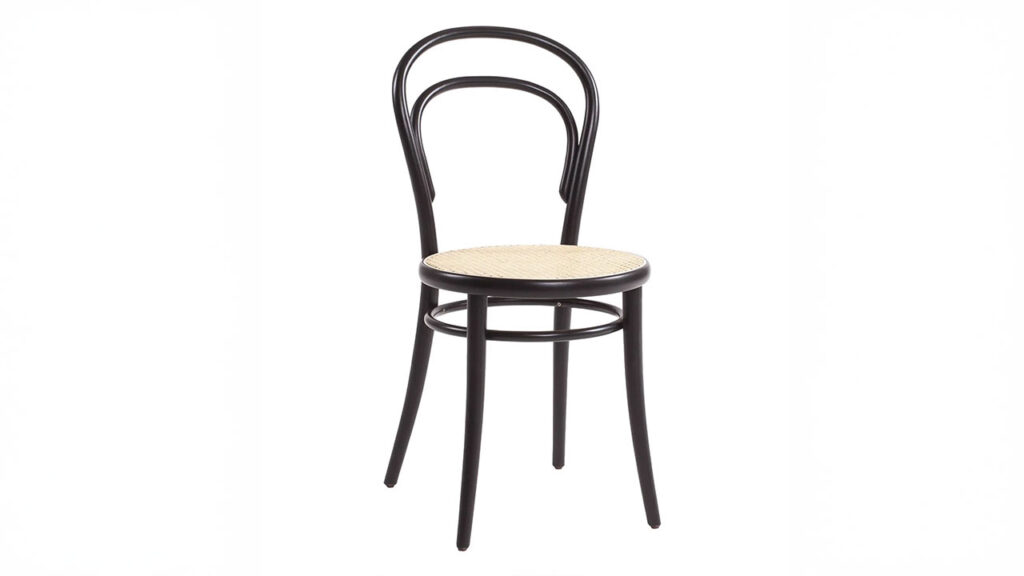
Cafés, both the establishments and the liquid poured into the cups, are institutions of Viennese life. Recognized as such by UNESCO, which comments: “Cafés are a place where time and space are consumed, but only the coffee is on the bill.” Magical places where you can stay for hours with a single coffee, sitting where Freud, Kafka, Wagner, or Zweig once sat. And it is precisely about sitting that we are going to talk: on chair No. 14 by a certain Michael Thonet, commonly called the Bistro chair.
Since 1819, this cabinetmaker worked in his workshop in his hometown of Boppard. He was a true designer ahead of his time, releasing bent laminated wood models as early as 1830. In 1841, at the Koblenz fair, he did not go unnoticed by influential people of the imperial court. Strengthened by this support, Michael Thonet closed his workshop and moved to Vienna in 1849 with his four sons.
The year 1859 would be the year of chair No. 14. It was Anna Daum, owner of a Viennese café, who was looking for a practical, elegant, and space-saving chair, which led him to design this product, which has sold over 50 million copies to date.
To maintain a good price-quality ratio, he launched a new concept: the kit! His product is so simple that you can build it yourself with only 6 pieces of wood, 10 screws, and 2 nuts. The bending of the blond beech or maple takes place in a steam oven for 20 to 30 minutes, then it is bent in less than 3 minutes in cast iron molds. A woven rattan seat is added to this skeleton.
Optimization ahead of its time
The icing on the cake, Thonet made huge savings on transport: 36 chairs could thus fit in a 1 cubic meter vehicle. Once assembled, the chair has a height of 84 cm and a seat at 46 cm.
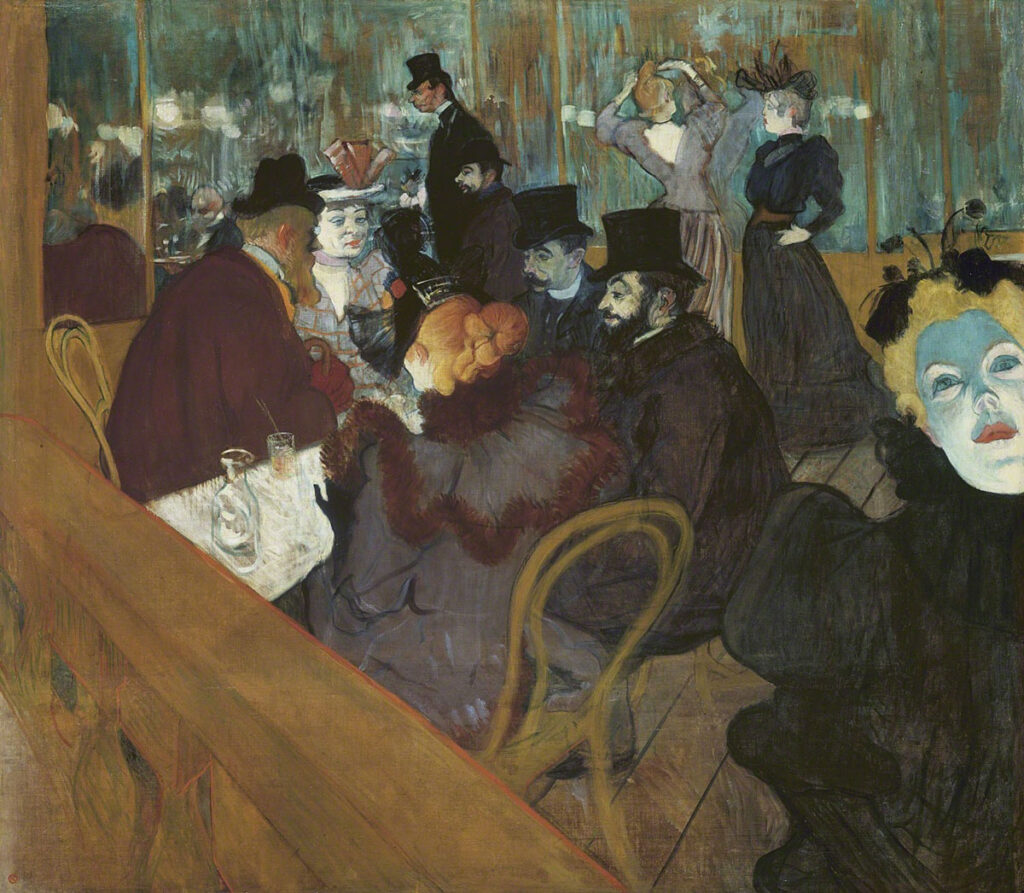
Upon Michael’s death in 1871, points of sale flourished all over the world, from New York to Moscow. In Paris, in 1892, the painter Toulouse-Lautrec immortalized it in his painting At the Moulin Rouge. Even today, it can be found in popular cafes. The next time the staff’s back is turned, discreetly lift your chair; stamped or labeled, the mark of this vintage icon will reveal the age of the beautiful lady on whom you are enjoying your Viennese coffee!
No Comments