



31 Mar A pioneer of the dream hotel, the Windsor in Nice
HOTEL DESIGN
THE WINDSOR
IN NICE
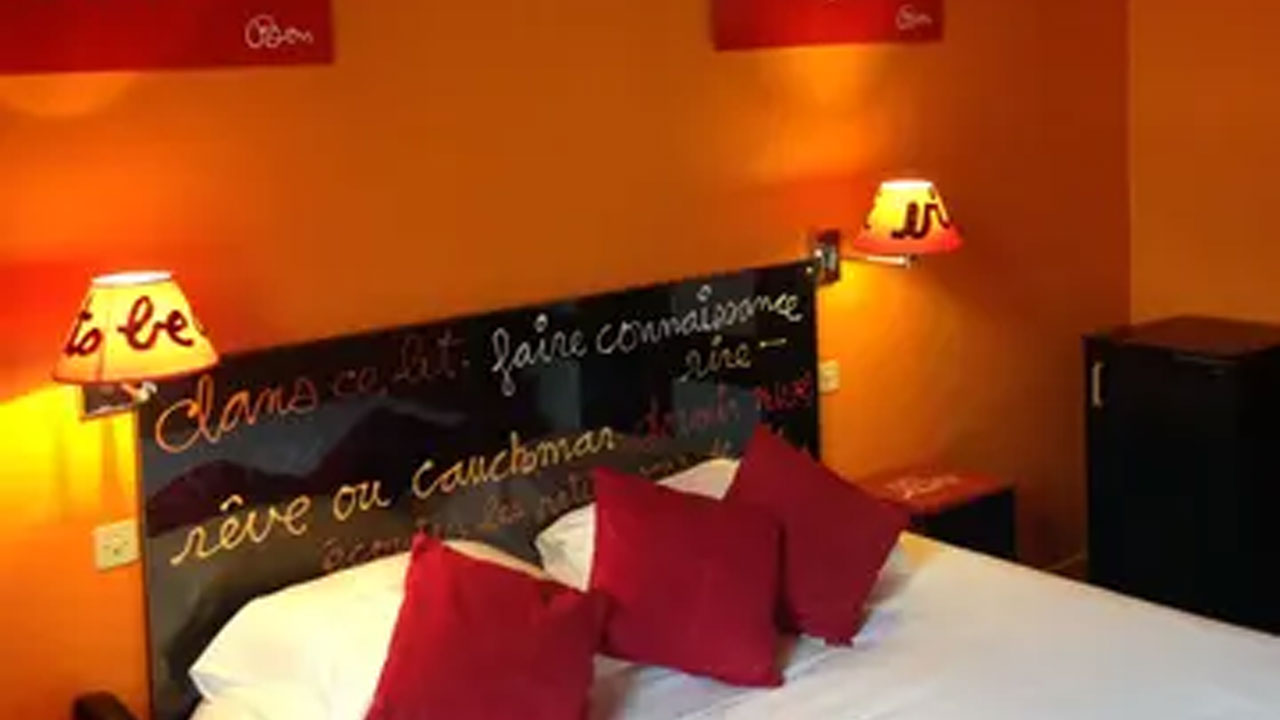
A pioneer of the dream hotel, the Windsor hides real artists’ rooms behind its outdated facade[cite: 1, 2]. A spirit of reinvention that is spreading throughout today’s luxury hotel industry[cite: 18].
A few steps from the Promenade des Anglais, behind a tall freestone building that has retained its outdated 19th-century facade and its family boarding house allure, nestle rooms created by contemporary artists: Glen Baxter, Ben, Jean Le Gac, Aïcha Hamu, Lily van der Stokker, Mathieu Mercier[cite: 2]. Each gave free rein to their imagination, with the only constraint being that the space remains a hotel room[cite: 3]. The main objective: to make art accessible to all[cite: 4]. It was to put an end “to pale light bulbs and gloomy wallpapers” that Bernard Redolfi wanted, more than thirty years ago, when taking over the hotel run by his parents since 1942, to give artists carte blanche[cite: 5]. Thus, since 1989, in this family boarding house, one sleeps in genuine “artists’ rooms”[cite: 6].
The contemporary art revelation
And yet, when Bernard Redolfi took over his parents’ pension, nothing predestined him for this adventure, except the desire to make people dream[cite: 7, 8, 9]. “Contemporary art, I was interested in it, but understood nothing about it,” he says[cite: 10]. After taking courses at the Villa d’Arson, a Nice institution created under the aegis of André Malraux, he participated in 1986 in an art trip to Ghent, Belgium[cite: 11, 12]. Seduced by Jan Hoet’s traveling exhibition, “Chambres d’amis”, things clicked for him[cite: 13]. Back in Nice, he imagined an artist’s room in each of the city’s hotels[cite: 14]. Since no one responded to his proposal, he went it alone[cite: 15]. Since 2004, his niece, Odile Payen-Redolfi, has taken over the reins of the Windsor[cite: 16].
Design at the heart of the new hotel industry
In Paris, New York, Los Angeles and all over the world, hotels are reinventing themselves[cite: 18]. When hotels plunge you into a story, the project of the Accor and LVMH groups to place design at the heart of the Orient Express revival is becoming clearer[cite: 17, 18]. For Sébastien Bazin, CEO of the Accor group, the Orient Express draws on its roots and dreamlike universe to look to the future[cite: 19]. With this brand, Accor reinvents the art of travel[cite: 20]. Today, with LVMH, the ambition is to explore new horizons and embody creative boldness[cite: 21]. Design is at the heart of this project[cite: 22]. Maxime d’Angeac, architectural art director, is dedicated to reinventing the historic train cars, work that resonates in the Orient Express hotels and sailboats[cite: 23, 24].
The excellence of the art of living
For designer and interior architect Tristan Auer, design is not limited to aesthetics but encompasses a vision of hospitality to create environments where one immediately feels at home[cite: 25]. An ambassador of the French art of living, he likes to mix contemporary style with the excellence of craftsmanship[cite: 27]. He notably participated in the transformation of Les Bains-Douches into a hotel, the renovation of the Crillon, the new decoration of the Carlton Hotel in Cannes, and designed the Prestige suite of the George V[cite: 26, 28]. As for Damien Perrot, Global Design Multibrand at Accor, he specifies: “We choose designers who bring their expertise and vision to shape the hospitality of tomorrow”[cite: 29]. As he stated with conviction in 2023: “Through design and innovation, we can create a new and better world”[cite: 31].
No Comments