



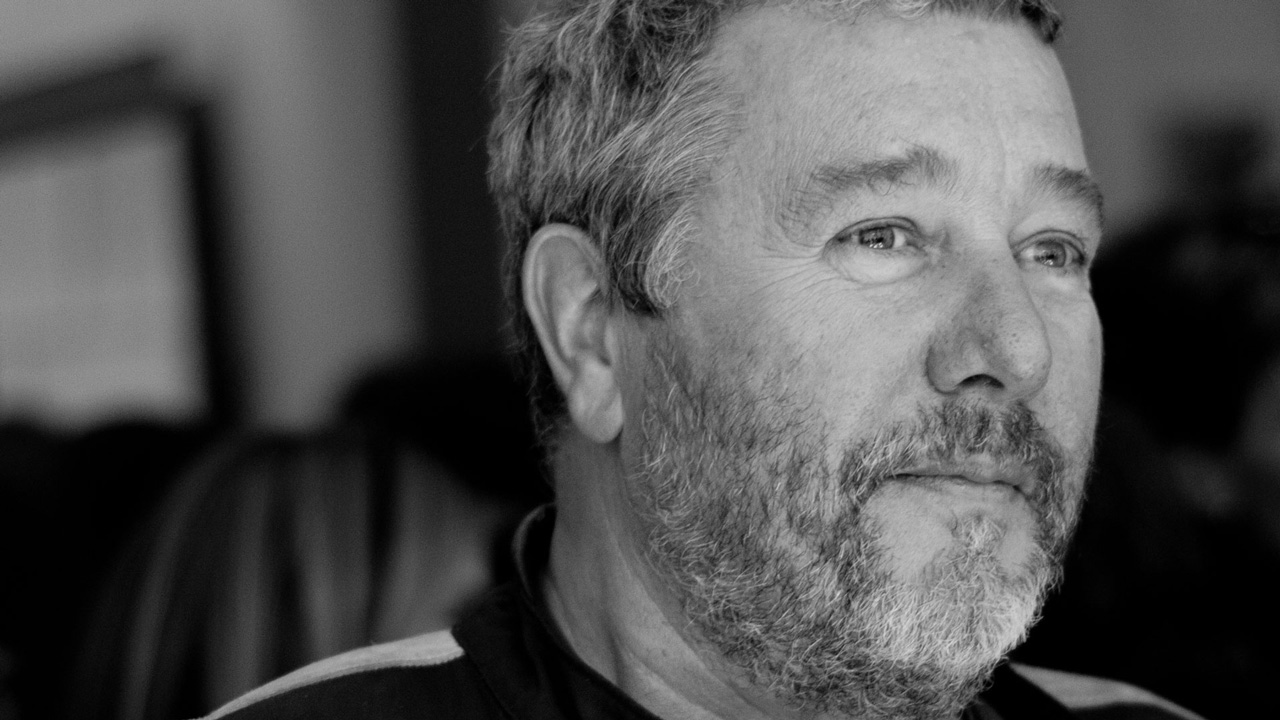
23 Mar JOURNEY TO PLANET STARCK
DESIGNER PORTRAIT
JOURNEY TO
PLANET STARCK
The most famous of designers draws three objects a day. From a toothbrush to Steve Jobs’ yacht, a dive into the brain of a demiurge.
Come on, just this once – and to plunge myself and you back into the years of the Le Monde newspaper – here is what I wrote in January 2013 about the work of the most famous French designer… Alright, I know, it’s been a while! Because since then, Philippe Starck has not been idle… We will return to the new creations of the most famous French designer, and as the web magazine Le Dessous des Objets progresses, we will update everything… But we will have to move fast, very fast because he will always be one step ahead… He creates so much!
Besides, how better to give you an idea of his extraordinarily prolific creation than to suggest you take a look at his website and consult what has been published about him in the press.
Inside Starck’s Brain (2013 Archive)
Philippe Starck is one of the few French designers, if not the only one, who is known worldwide. Not only by people in the trade. He says, without false modesty, that he receives nearly two hundred requests a month for an interview, an exhibition proposal, a book, a conference… and that he ignores almost all of them. In thirty years of activity, with more than ten thousand creations to his credit – he draws at least three objects a day – he is the most prolific and protean designer. At the end of 2012, he added a book to his work, titled Impression d’ailleurs. Which is surprising. No photographs. No drawings. No revelations either about the designer and how he conceives things and draws.
And yet, the range of Starck-branded creations forms a true Prévert-style inventory: cafes, hotels, boats, port, clubs, museums, toothbrushes, bicycles, lighting, mirrors, furniture… But he has no desire to get into the exercise of making-of. Nor does he want to discuss a 2012 rich in a good thirty objects, and otherwise marked by the tenth anniversary of the Louis Ghost armchair, produced by Kartell, an uninterrupted success. He will not mention the financial conflict opposing him to the heirs of Steve Jobs, who died in 2011. Starck indeed designed the white and minimalist yacht of the Apple founder, baptized Venus, which measures nearly 70 meters long and is controlled by seven iMac computers lined up in the cockpit.
A Democratic Visionary
If Starck is a visionary, it is not only because he was the first, with the Café Costes, inaugurated in 1984 in the heart of Paris, to have invented a place where one finally feels comfortable even in the restrooms. His transparent plastic chair is also the best-selling in the world: more than 1.5 million copies. He designed the Freebox for Free in 2010, which remains a compact, elegant, and efficient object.
The restaurant Ma Cocotte, at the Clignancourt flea market in Saint-Ouen, for which he realized the interior and exterior architecture, is a hit. It has been talked about so much that he can’t get over it: “A kind of madness, even globally, I feel like I’ve only done that my whole life,” he confides.
Today we await the next Navigo pass, half-parma half-silver in color, which will be put into circulation this year for transport in the Ile-de-France region. He graciously created this everyday object, which he “only sought to make elegant, both by design, the gesture, to adorn it with nobility, with the hope that it ennobles the people who will use it.” The next project? An ecological prefabricated house. “It’s the only point of this profession to believe that it can influence if not change life.”
Ellipses, Sensations, Feelings
Philippe Starck is perhaps that artist who would proceed from the demiurge, as Michel Onfray asserts in Écrits sur Starck. Demiurge? The word suits him. Not only because he creates intensely. But also because the Greek etymology of the word refers to the craftsman. A profession he claims, more than that of an artist.
To understand Philippe Starck, the engine of his creation, one must abandon the drawing board and enter his brain. Listen to him speak. Observe how he functions, multiplying ellipses, sensations, feelings, references to the unconscious. Have him describe his nights and his sleep. His relationship to others and to society. Evoke his typical day. Make him talk about his father, André Starck, an aeronautical engineer-inventor-designer. Also touch upon his fears, which would have pushed him, out of “weakness or ease”, towards design: “If I hadn’t been afraid, if I had had self-confidence, if I hadn’t wanted to reassure myself, I wouldn’t have made little drawings.”
To understand Philippe Starck, one must listen to him talk to us about his mental universe, his way of thinking and living. He does not hesitate to put the list of his creations, “extraordinarily dense”, in tension with his life, which he says is “of incredible density”. And if his resume is twenty pages long, he confides, with a burst of laughter, that if it is “hallucinatory”, it is a “mental anomaly” based on an imagination with “fertile surprises”. This is what strikes you when you listen to him, and it is the most important thing. Because without these “mental anomalies”, there would not be all these objects that inhabit our daily lives and that form the Starck universe.
Sorry, the comment form is closed at this time.